Showing posts with label Jules Verne. Show all posts

Wednesday, 13 May 2020

Review: Around the World in Eighty Days (novel)

Why yes, I am reading a lot of Jules Verne's novels lately. Thanks to the current insanity I'm barely able to travel to the shops, but by reading Verne I can travel all over the world -- or even to the moon.


Around the World in Eighty Days is an 1872 novel by Jules Verne. It's one of his most famous novels and has been adapted many times. (The most famous -- and best -- adaptation is of course the 1956 film, which is incidentally one of my all-time favourite films.)

Jean Passepartout wants a quiet life working for someone who doesn't travel much. Unfortunately for him he starts working for Phileas Fogg on the very day Mr. Fogg accepts a wager to travel around the world in eighty days. During the journey they face unexpected delays, rescue an Indian princess, and run into near-catastrophe on multiple occasions. To complicate matters, a detective is convinced Mr. Fogg is really a bank robber, and he follows them all over the world in an attempt to arrest him.

I've read the book at least ten times, but every time I start it again it's like I've never read it before. Of course I know that Passepartout will rescue Aouda, and that Mr. Fogg will buy a new boat and reach England in time, and that Fix will discover he's made a mistake after arresting Mr. Fogg. Obviously I know how it ends, and that there's a plot twist ahead even when all seems lost. Yet somehow I never think of that when I'm reading it. The story is so absorbing that I might as well not have a clue what happens next.

When you're not able to travel to foreign countries in real life, reading about them is the next best thing. I expect I'll reread this book frequently over the next few weeks.

Is it available online?: Yes, on Gutenberg. (I think this translation is reasonably good.)

Rating: 7/10.

Sunday, 10 May 2020

Review: Twenty Thousand Leagues Under the Sea (novel)

A hallmark of Jules Verne's novels is the frequent lectures on chemistry, geography, technology, and other subjects. Half of this novel is a science fiction story. The other half is a sometimes out-of-date marine biology textbook.


Twenty Thousand Leagues Under the Sea (a more accurate translation is Twenty Thousand Leagues Under the Seas) is an 1871 novel by Jules Verne. It's one of his best-known works and has been adapted frequently; the most famous adaptation is of course the 1954 Disney film. It was followed by a sequel, The Mysterious Island, which I haven't read yet. Technically it's the second in a trilogy, preceded by In Search of the Castaways AKA The Children of Captain Grant, but it has no connection with the first book.

I watched the film before I read the book. So I expected the book would be like the film. Turns out, it isn't. What's even more surprising is that I actually like the film better.

Almost everyone knows the plot. Professor Arronax and his servant Conseil join the hunt for a sea monster. The sea monster turns out to be a submarine: the Nautilus, owned by the mysterious Captain Nemo. Arronax, Conseil, and their friend Ned Land become Nemo's prisoners, and travel all over the world before they finally escape.

The book is quite short. Unfortunately almost half of it is taken up with lists of the fish Arronax sees, technical details about how the Nautilus works, and other decidedly boring statistics. When I read a science fiction novel I expect it to be actually fiction. If I want a science lesson I'll just find a textbook.

Unlike the film the book doesn't end with Nemo's death. Our heroes sneak off the Nautilus (how they manage it is never explained), and Nemo's fate is left uncertain. Apparently The Mysterious Island explains it. But without reading that book, this one's ending is very unsatisfactory.

Is it available online?: Yes, on Gutenberg. (This is one of the best translations.)

Rating: 6/10.

Wednesday, 6 May 2020

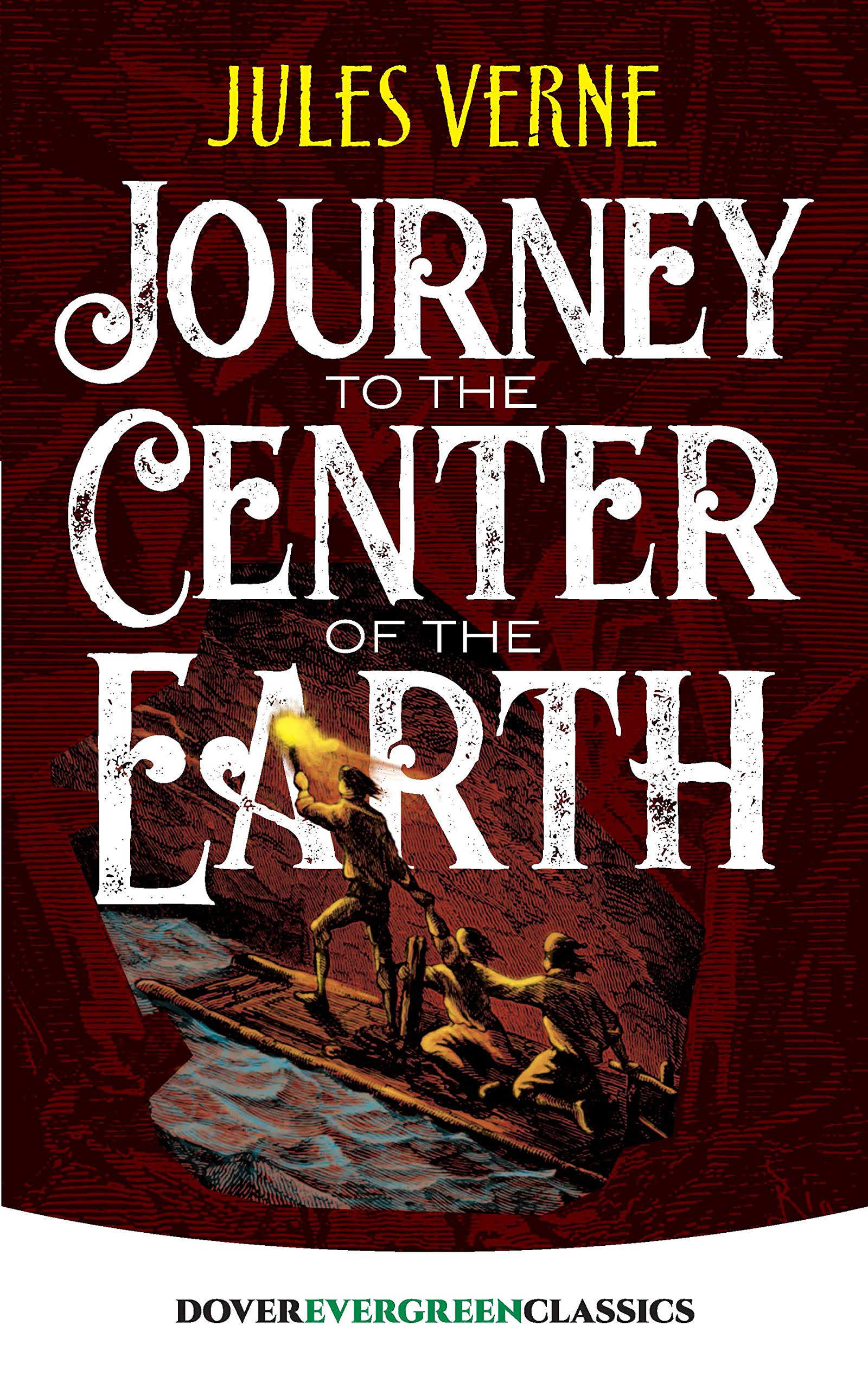
Review: Journey to the Centre of the Earth (novel)

Jules Verne was a good author. Unfortunately his works have been subjected to many, many terrible translations.


Journey to the Centre of the Earth is an 1864 novel by Jules Verne. It's the third of his Extraordinary Voyages novels, and one of his best-known works. It's been adapted into at least four films and three miniseries. None of the adaptations stay close to the book.

The basic story is the same in both the original novel and the bad translations. Professor Lidenbrock and his nephew Axel find a mysterious message from a long-dead explorer claiming to have reached the centre of the earth. They immediately -- and reluctantly, in Axel's case -- go to Iceland, climb into a volcano, and set off for the earth's centre.

The translation I read made mincemeat of the novel, yet it still managed to be an interesting story. Unfortunately I can't read anything more complicated than basic French, and I don't know how to find a good translation. I suspect the translator responsible for what I read also couldn't read French. To start with, they changed the characters' names. Lidenbrock became Hardwigg and Axel became Harry. Apparently they also added scenes. I couldn't make heads or tails of Axel/Harry's bizarre dream(?) about a giant ape until I learnt it wasn't in the original novel.

I realised pretty quickly that I'd got one of the worst translations. When you read translated novels regularly you learn to spot the hallmarks of a subpar translator. If you're lucky you'll just get clunky prose. If you're unlucky, most of it's complete gibberish. But I persevered. As long as I reminded myself that the bad writing was the translator's fault and not Verne's, I could almost ignore it and focus on the plot.

Luckily the plot itself makes up for the translation. Sure, it's not at all plausible or scientifically accurate -- something the characters themselves comment on. But it's so interesting I had trouble putting it down.

If you find a good translation, this book is definitely worth reading. Unfortunately it's very difficult to tell which translations are good and which ones shouldn't be touched with a barge-pole. Even if you get one of the worse ones, you'll probably still enjoy the story -- though some scenes might leave you scratching your head.

Is it available online?: Yes, on Gutenberg. (Apparently this version is one of the better translations.)

Rating: The version I read gets 2/10. The story itself gets 7/10.