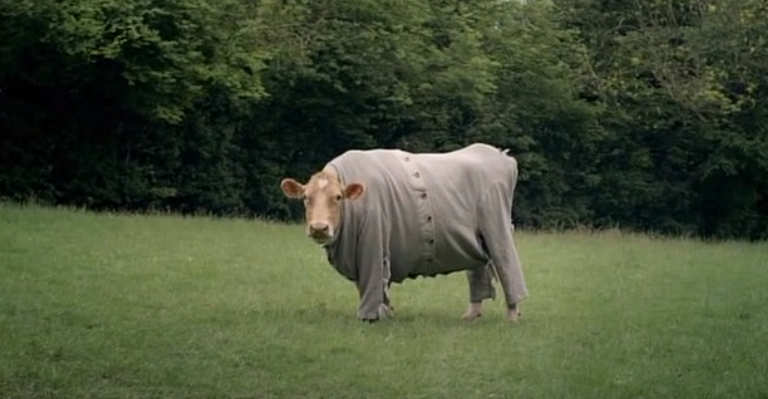
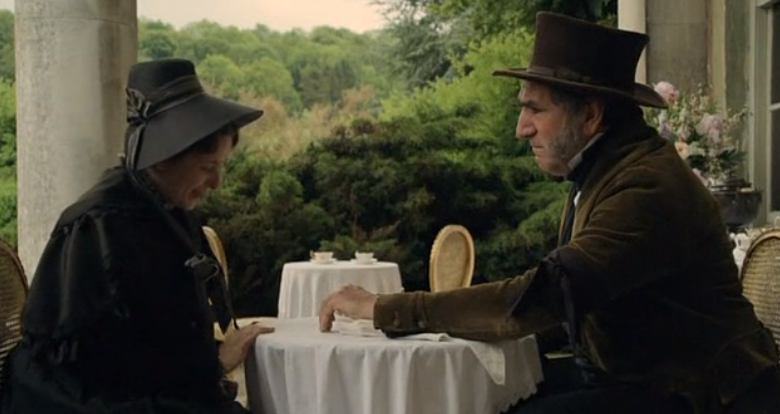
Wednesday, 5 September 2018

Review: Elisabeth das Musical (Vienna, 2005)

I decided that I really don't like Middlemarch enough to review it yet, so instead I'm going to review something I do like. And Monday was the 26th anniversary of Elisabeth's premiere, so this seems like a good time for this review!

Unlike the other works I've reviewed so far, Elisabeth isn't a series, book or manga. It's a stage musical, and this version is a filmed stage performance that was released on DVD.


So, what is Elisabeth? It's a German musical, the most successful German musical ever made actually, and it's about Empress Elisabeth of Austria (aka Sisi/Sissi). It's a very fictionalised account of her life, involving an invented romance with Death himself, narrated by the man who murdered her.

(Yes, it's weird.)

You probably won't recognise any of the actors unless you're a fan of European theatre, so I won't bother listing them.

Now, onto the story itself. Elisabeth is a sung-through musical like Les Misérables, so it's impossible to talk about the plot without mentioning the songs. Some of the songs; listing of all them would take too long.

Spoilers ahead, but if you know Austrian history then you already know the biggest spoilers.

The show starts with Luigi Lucheni, Elisabeth's murderer, posthumously trying to defend his actions in what appears to be a sort of Purgatory. He summons the ghosts of people who knew Elisabeth, and then Death himself appears.

Lucheni

The ghosts

Der Tod/Death (What was the costume designer thinking? Other productions have Death in much less comical costumes than that... frilly... thing.)

It should be obvious that this show has a rather... unusual personification of Death. He isn't a skeleton, he doesn't wear a cape, and he doesn't have a scythe. Instead he kills people by kissing them.

Elisabeth herself appears for the first time in the second song. (For some reason she's nowhere to be seen in the prologue. Strange, since it's all about her.)

Elisabeth

Her father is about to leave to avoid a family gathering, and Elisabeth wants to go with him. At said family gathering, Elisabeth's mother announces that her sister Hélène is going to marry Emperor Franz Joseph. (Is that spelt "Joseph" or "Josef"? I've seen both spellings used, even in biographies, so who knows 🤷) Elisabeth interrupts by performing a circus trick, that goes horribly wrong and leads to her falling to her death.

No points for guessing who turns up.

Why is the stage so incredibly poorly-lit half the time? I know, atmosphere and all that. But for heaven's sake can't it be brighter and atmospheric at the same time?

Elisabeth and Death, in better lighting.

Death arrives to take Elisabeth's soul. Then they fall in love at first sight, so he changes his mind and lets her live.

Two scenes after this, Elisabeth meets Franz Joseph and falls in love at first sight with him. It's obvious from the start that this is a terrible idea. The necklace he gives her looks like a noose. Their wedding music sounds like a funeral march. The guests and in-laws talk about how Elisabeth isn't suited for life in Vienna. Death gate-crashing the wedding is just the icing on the cake.

Der letzte Tanz (The Last Dance)
Every musical has at least one song that stands out. Elisabeth has several of them, and this is the first one. It's the song Death sings during the aforementioned gate-crashing, and it's all about how Elisabeth is going to hate married life and how she'll be his in the end, set to a tune that'll stay in your head for weeks.


This version of "Der letzte Tanz" isn't my favourite. It's weird, because the song is one of my favourites in the show, and Máté Kamarás is one of my favourite actors to play Death, but... I just don't like his version of "Der letzte Tanz".

Anyway, moving on. Elisabeth's mother-in-law Sophie sets out to make Elisabeth's life hell. Franz Joseph, mummy's boy that he is, runs away when his wife asks for help.

Ich gehör nur mir (I Belong Only to Myself)
Elisabeth is Not Impressed by Franz Joseph, so she sings a (really, really awesome) song about how she belongs to herself.

Poor lighting strikes again! Why are the characters (sometimes) brightly-lit when the stage around them is almost completely dark?

It took me several months and about twenty different productions to realise that this song is a bit like "Let It Go" from Frozen. Thematically, but also because both songs end up being contradicted by events later in the musical. Elsa can't let go of the past because of the consequences of her actions. Elisabeth doesn't belong to herself in the end; she dies and belongs to Death.

I'd better stop that line of thought right there before we get completely sidetracked.

Things don't go well for Elisabeth after this, as Lucheni is delighted to tell us. She has two children, but Sophie takes both of them away. Elisabeth gets Franz Joseph to intervene, and then one of her children dies. Naturally, Death takes this opportunity to gloat and insist Elisabeth loves him more than her husband.


Death is a creep (a creep who kills children!), Franz Joseph is a coward (when his mother's involved, at least)... Really, Elisabeth would be better off without either of them.

Things don't get better after Rudolf's birth. Sophie is still determined to interfere, when she refuses to let Rudolf visit Elisabeth.

Rudolf and Sophie

Elisabeth finds out about this and gives Franz Joseph an ultimatum. Guess who sees this as the perfect time to visit?

I guess he gets points for persistence, if nothing else...

Death nearly gets Elisabeth to give in (read: die), but she snaps out of it in time and tells him to get out.

Elisabeth becomes obsessed with the only part of her life she can control: her appearance. She begins a bizarre beauty regime that involves excessive dieting and things like steaks being placed on her cheeks(!). The weirdest thing about this is that apparently it's all true.

Franz Joseph decides to let her raise Rudolf (and their other children, but the musical seems to have forgotten they had any other children). Elisabeth appears, wearing (a version of) her famous Sternenkleid (Star-dress). And of course, Death appears too.


This scene would be more impressive if the stage was better-lit. (Yes, I am still annoyed about that!) What genius decided that Franz Joseph should get more light than Elisabeth? And Death might as well be a floating head. Most annoying.

Act 2 begins with Elisabeth and Franz Joseph being crowned King and Queen of Hungary. Lucheni takes this chance to ham it up more than usual, the Hungarian people are delighted with their new queen, and of course Death invites himself along.

Wenn ich tanzen will (When I Want to Dance)
The real love story of this musical is the composer/catchy songs. Almost every single song in the show is ridiculously memorable, and will come back to you at the worst possible moment. (Case in point: I caught myself humming "Kitsch" while waiting for a job interview.) "Wenn ich tanzen will" is one of the most memorable. Which is ironic, because (as far as I can tell from bootlegs) it was only added to the show in 2001.


For once Elisabeth gets to gloat at Death: she's victorious and he had nothing to do with it. He tries to regain control over her, but she evades him and leaves triumphantly.

Mama, wo bist du? (Mama, Where Are You?)
Now Death gets to be especially creepy. Elisabeth and Franz Joseph are more or less ignoring Rudolf. The poor kid is all alone and wondering where his mother is. Death visits and convinces Rudolf that he's his friend. What's weirdest is that it's actually... sort of adorable. In a scary way.

Aww... Whoops, I mean get away from him, Rudolf!

In this scene Rudolf also says that he killed a cat. Every time I hear this I nearly lose all sympathy for him. "This little brat kills cats? You can have him, Death! You're welcome to him!" Neglectful parents and a hellish grandmother are not an excuse for animal cruelty, Rudolf.

Elisabeth's life becomes worse and worse, culminating in Sophie sending Franz Joseph to a brothel to break Elisabeth's influence over him. (This is a scene I always skip, for the same reasons that I always skip "Lovely Ladies" in Les Misérables.)

In the next scene Elisabeth collapses. Death, disguised as a doctor, tells her that her husband's adultery has given her an STD. This is the death knell (pun intended) of Elisabeth and Franz Joseph's marriage. She leaves Vienna and spends years travelling.

Die Schatten werden länger (The Shadows Grow Longer)
Rudolf is now a depressed, unhappy adult who disagrees with the way Franz Joseph rules but can't do anything about it. Death visits and offers a solution: suicide. Rudolf breaks free from his influence at the end of the song. But if you know history, you already know how this will end...
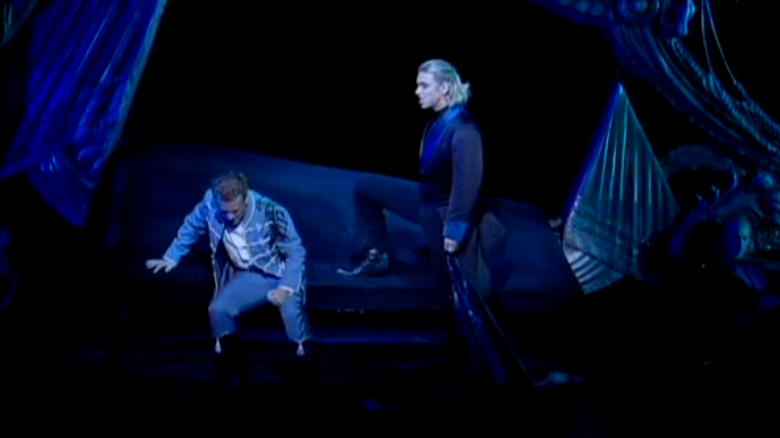

"Die Schatten werden länger" is probably the main Villain Song of Elisabeth. It's awesome, it's (very) memorable, and it's terrifying. Rudolf sees Death as his friend, and Death wants to kill him. That's scary enough on its own. But take away the supernatural aspect, and you get someone who doesn't care for their "friend" at all and is just using them. How many times does that happen in real life? *shudders*

After this Rudolf has a confrontation with Franz Joseph, which for some reason involves Franz Joseph standing in a... giant crown? (This is a perfect example of why the Vienna stagings aren't my favourite versions of the show. They take symbolism so far that it stops being symbolism and becomes a confusing distraction.)
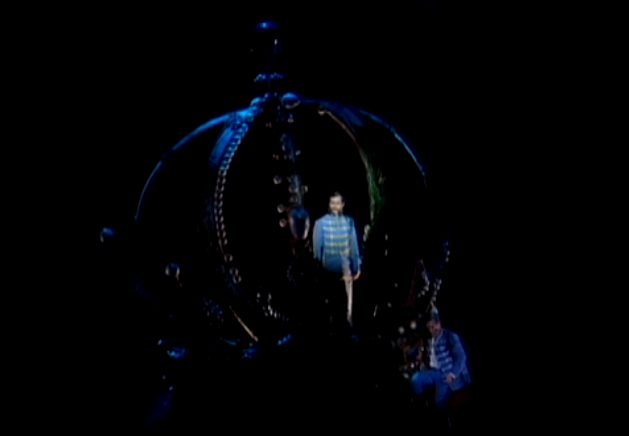
And the lighting is still terrible. Did someone forget to pay the electricity bill?

This is followed by "Hass" ("Hate"), another song I always skip. It's several minutes of Nazis (alright, so they weren't called that then, but that's what they are) marching around the stage, attacking Jews and complaining about Elisabeth and Rudolf.

Rudolf begs Elisabeth for help. She turns him away. And this is the part I always dread. Death appears (dressed as a woman, for reasons I never understood until I realised it's symbolism again) and gives Rudolf a gun. And Rudolf kills himself. Noooooo 😭😭

Rudolf, wo bist du? (Rudolf, Where Are You?)
One of the fun (read: heartbreaking) things about Elisabeth is that it reprises songs in the worst possible ways. "Mama, wo bist du?"/"Rudolf, wo bist du?" is possibly the best (read: most agonising) example.

Elisabeth finally realises how she neglected and abandoned her son, and begs Death to take her. And then Death, who has spent the entire show trying to convince Elisabeth to die, rejects her and says he doesn't want her. Why the sudden change of heart, Death?


The Takarazuka productions explain it as Death wanting Elisabeth to join him because she loves him, not because she's given up. I'm not sure if I agree with that interpretation or not. The German-language productions don't give any explanation at all, and it's up to the viewer to guess if Death has lost interest in Elisabeth, or if he never cared for her at all, or if there's some other reason.

Franz Joseph and Elisabeth have a final meeting, and Elisabeth tells him they were never meant to be together. True, but it's surprisingly sad to watch. Death and Franz Joseph meet in a nightmare sequence. Death insists that he loves Elisabeth and will set her free... by giving Lucheni a murder weapon. That is not how you show love, Death!

Lucheni stabs Elisabeth. This time Elisabeth accepts Death. It's surprisingly sweet, considering how deeply messed up both of them are.

No. #1 on my list of "Things That Shouldn't be Adorable but Totally Are"

But then Death ruins everything (is anyone surprised by this point?) and apparently kills Elisabeth with his kiss. And then hands her body to his backup dancers (okay, so their official name is "Todesengel"/"Death's Angels", but I always think of them as "Death's Backup Dancers") to carry off to her coffin.

This is not my favourite version of the ending. It looks like Death cared nothing for Elisabeth after all, when his love for her motivates his actions in the musical.

Anyway, my overall opinion of both the musical and this version.

The musical is awesome no matter what version you watch. But some are more awesome than others. The Vienna productions in my opinion are among the less awesome versions. They're so full of symbolism and general weirdness that they end up distracting from the actual story.

I'm also not a fan of the scene order in the Vienna versions. It makes very little sense, plot-wise, for "Nichts, nichts, gar nichts" to take place immediately after "Mama, wo bist du?". "Nichts" makes more sense placed after "Die rastlosen Jahre", when Elisabeth has a definite reason to be miserable. Same goes for "Streit Vater und Sohn" being placed after "Die Schatten werden länger"; Rudolf's desperation makes much more sense when we've seen Franz Joseph dismiss him. And then there's the staging of the ending, and the terrible lighting.

(That last one seems to be just a problem with the DVD, though. The 1992 Vienna version had much better lighting, even though it made everything blue for some reason, and bootlegs of other shows from the Vienna revival also have better lighting. Apparently the DVD makes the lighting look worse than it was. Weird.)

But enough about the musical and the Vienna stagings in general. Now to talk about this version. Specifically, the actors in this version.

(Be prepared for a very long, rambling essay on this subject.)

I've already said that Máté Kamarás is one of my favourite Deaths. His version of the character is so dramatic and energetic and over-the-top that it's impossible not to like him. And unlike some Deaths (*cough*Mark Seibert*cough*) he genuinely seems to love Elisabeth. A very obsessive, unhealthy sort of love, but probably the closest Death can get to loving anyone.

Serkan Kaya is unquestionably my favourite Lucheni. He's sarcastic, bitter, funny -- everything a Lucheni should be. But he isn't just the snarky narrator; there are moments when he shows a deeper side to his character, and acts as if he almost regrets murdering Elisabeth.

Fritz Schmid is a pretty good Rudolf, though I wouldn't say he's my favourite Rudolf. His hair always makes me giggle when he first appears. (Which is a problem, because of when he first appears...) Seriously, what is that hairstyle? The historical Rudolf didn't have curly hair, judging by the pictures I've seen of him, and neither do the musical's Rudolfs... except this one. Strange.

Sophie is a character who's incredibly hard to like, but if I had to chose a favourite actress to play her, I'd probably pick Else Ludwig. She manages to perfectly portray Sophie's strictness and certainty that she's always right and Elisabeth is always wrong.

There's nothing wrong with Maya Hakvoort's portrayal of Elisabeth, but I've never been able to warm to her version of the character. I don't know why. Maybe it's because she's obviously too old to be convincing as young!Elisabeth, or maybe it's just because she's not Pia Douwes (...but neither is Mari Hanafusa, and I love her Elisabeth 🤷).

Nothing against André Bauer, but Franz Joseph is one of those characters whose every action annoys me. I haven't found a single actor who's made the character less irritating.

The rest of the cast are just there in the background, if that makes any sense. None of them stand out, but none of them are terrible either.

So, what's my overall opinion? The musical is great, and while this isn't my favourite version of it, there are far worse productions out there. *side-eyes that bizarre Thun production* Next to the 1992 Vienna version, this is probably the best-known and most-watched production of Elisabeth. So it's definitely worth watching!

Is it available online?: Yes, here is a version with (not always great) English subtitles. You can also find versions without English subtitles, if you speak German or already know the plot.

Rating: The musical itself gets 9/10. This version gets 7/10.

Sunday, 2 September 2018

Review: Dombey and Son (novel)

It's about time I reviewed a book, don't you think? 😃 So for my first book review, I've chosen one of Charles Dickens' lesser-known novels. I first read it years ago and wasn't particularly impressed by it. But recently I read it again. Has my opinion changed? Let's find out!

Cover of the novel when it was serialised

Dombey and Son is Charles Dickens' seventh novel. It was first published as a novel in 1848. Its full title is the very long Dealings with the Firm of Dombey and Son: Wholesale, Retail and for Exportation. (A better, shorter title would be Terrible Parenting: The Novel.)

Attempting to explain the plot of a novel -- especially a Dickens novel -- is much harder than explaining the plot of a series. So I'll just give a brief summary of the main plot points, then move on to what I thought of it.

Mr. Dombey wants a son to join him in the family business -- the titular Dombey and Son. He already has a daughter, Florence, but he acts as if she didn't exist. Eventually he has a son, Paul, who dies as a child. Dombey's first wife died in childbirth, so several years later he remarries a woman named Edith. Edith and Mr. Dombey soon come to hate each other, and Mr. Dombey is furious that Edith is fond of Florence. In the middle of this mess is Dombey's treacherous manager, Mr. Carker, who manages to make everything even worse.

Dombey and Son is unusual for a Dickens novel in that there is no mystery plot. Oliver Twist, Nicholas Nickleby, Little Dorrit and many of his other novels include or revolve around someone being secretly related to someone else. Instead the main plot of Dombey and Son is the misery the dysfunctional Dombey family bring to themselves and those around them. The only secret relatives are Edith and Alice, and that's a connection that's only revealed towards the end and has very little importance to the plot.

Bad parenting is a recurring theme in Dickens' work (unsurprising, since he didn't have the best parents himself). Mr. Dombey is possibly the worst example of this. The way he completely ignores Florence makes my blood boil. His redemption near the end is clearly supposed to be touching, but it rings hollow in light of everything he did until then. He brought all his misfortunes on himself, and even though Florence forgives him he still neglected her for most of her life.

Edith is another character it's difficult to sympathise with. Yes, her mother was awful and she was in an unhappy marriage... but no one forced her into that marriage! She could have refused Mr. Dombey's proposal! Why on earth did he even propose to her, anyway? He didn't love her, or even like her. That marriage doesn't make any sense to me, and I could see disaster looming from the moment they got engaged. Sometimes such obvious foreshadowing is a good thing, but in this case it just makes the characters look like blithering idiots. Unusual for Dickens; he normally managed foreshadowing much better.

There are some characters who I just can't wait to see die. Mr. Carker is one of them. From the minute he and his teeth first appear, it's obvious he's the main villain. (Though a pretty good argument could be made for Dombey himself being the main villain.) His every action after that makes him even more despicable. He reminds me a lot of Uriah Heep, actually. I was a bit disappointed that Mr. Dombey didn't confront him before he died, but it's very satisfying that his money is used to help Mr. Dombey in the end.

So, you ask, are there any good characters in this book? Yes, thankfully!

Florence is one of Dickens' best (and most tragic) heroines. She spends most of her childhood hoping her father will love her, and instead he views her as a rival for Paul's affection and -- after Paul's death -- wishes she'd died instead. I cheered when Florence finally runs away from her home, even though the circumstances of said running away are pretty tragic. And her engagement to Walter is one of the cutest scenes in the book 😍

And that leads us to another good character: Walter. The idea that Walter could be thought dead for years stretches my suspension of disbelief just a little (or maybe not. This is before telegraphs were invented, after all...). But Walter himself is such a nice guy that his personality makes up for that.

And then there are the minor characters. (It wouldn't be Dickens without dozens of minor characters!) Captain Cuttle is amazingly adorable for a former captain with a hook for a hand. Major Bagstock is almost as vile as Carker. Harriett and John Carker have to go through so much (most of it thanks to their brother) that I spent the whole book hoping they'd get some happiness by the end, and was delighted when they did. Mrs. Skewton is so ridiculous (an elderly woman dressed like a little girl and pretending to be Cleopatra? *shudder*) that she's both creepy and hilarious. Mr. Toots is heartbreaking, and I'm so glad he finally gets a happy ending. Susan Nipper is amazing. She's the only heroic character who tells Mr. Dombey what she thinks of him, and that scene alone makes her one of my favourite characters. And that's only the ones who immediately come to mind.

Dombey and Son isn't one of Dickens' best novels. But it's still a pretty good novel. (Of course it is. It's Dickens!) There are some truly great scenes and passages in it. And overall I enjoyed it, though it wouldn't be one of my favourites.

Can it be read online?: Yes, on Gutenberg.

Rating: 6/10.

I'm not sure what I'll review on Wednesday. Possibly Middlemarch (1994), or possibly not.

Wednesday, 29 August 2018

Review: Cranford (2007) Episodes 4 & 5

(Review of the first three episodes here.)

Episode 3 ended with Miss Matty grieving Mr. Holbrook. Episode 4 starts a short time later.

Mr. Holbrook's belongings are being auctioned. At the auction Miss Pole buys a picture of him to give to Miss Matty (aww 😊), and Dr. Harrison buys a piece of furniture that turns out to be a lady's sewing box. He's embarrassed when his landlady Mrs. Rose tells him what it is, so he offers to let her use it. Bad idea, Dr. Harrison!

If he only knew the trouble that thing would cause...

Mr. Carter sends Harry to take a letter to Lady Ludlow. Harry opens the letter and reads it, and loses it shortly after. Lady Ludlow is not happy. She's even more unhappy to learn Harry can read, and that Mr. Carter taught him. So she gives Harry a job in the cowshed, and asks Miss Galindo to take Harry's job with Mr. Carter.

Miss Pole comes to visit Mrs. Rose, with the news that Queen Victoria has had a new baby: Princess Alice.

(I love interesting historical facts, so now I'll go on a brief tangent. Princess Alice (1843-1878) was the third of Victoria and Albert's nine children, and the first to die. She married a German prince and had seven children, two of whom died before her. One of Alice's daughters, Princess Alix, became Empress Alexandra of Russia. Yes, the last Empress of Russia. And another daughter, Princess Victoria, was the grandmother of Prince Philip.)

Now, enough history. Back to Cranford. Miss Pole sees the sewing box. She immediately recognises it as what Dr. Harrison bought at the auction, and jumps to the conclusion that Dr. Harrison gave it to Mrs. Rose because he's in love with her. Naturally, the first thing Miss Pole does is run and tell Mrs. Forrester. (It never ceases to amaze me that she didn't tell the whole town 😃)

Dr. Harrison hasn't a clue about this. He visits Sophy's father to ask permission to court her.


On his way back from the rectory, Dr. Harrison meets Miss Tomkinson. She still thinks he intends to marry her sister, so she tells him that she has set aside a dowry for Caroline. Poor Dr. Harrison doesn't know why she's telling him this.

Mary has been having headaches, so she goes to Dr. Harrison. He tells her that she has a problem with her eyes, and asks Dr. Marshland -- an expert on eyes (and on causing trouble for his friends) -- to see her. He diagnoses far-sightedness, and gets her a pair of glasses.


Miss Matty has shares in a bank that has just failed, leaving her with almost no money at all. With Mary's help she tries to conceal how bad her financial situation is from her friends. Poor Miss Matty 😢

Trouble is brewing for Lady Ludlow. Her wretched son demands more money to build his villa, but she's no money to spare. Rather than sell land to the railway, she decides to put a mortgage on her estate. Mr. Carter strongly advises against this.

Miss Pole and Mrs. Forrester tell Mrs. Rose about Dr. Harrison's supposed interest in her. They do their best to make the marriage happen, even dyeing Mrs. Rose's hair!


May Day arrives, and Martha has a scheme to get money for Miss Matty. She'll marry Jem Hearne and they'll become Miss Matty's lodgers. Jem is less enthusiastic about this plan.


Disaster strikes for Dr. Harrison. Miss Tomkinson tells Reverend Hutton that she expects the doctor to marry Caroline. Rev. Hutton immediately goes to confront Dr. Harrison. Mrs. Rose arrives in the middle of this scene, and says she is engaged to the doctor. Poor Dr. Harrison doesn't understand any of this.


The scene starts out hilarious, with so many misunderstandings all being revealed at once. But then it becomes sad when Dr. Harrison has to watch Sophy walk away, and knows she thinks he's been unfaithful to her. Ouch, poor guy 😢


Now take a deep breath and keep tissues handy, because the final episode has arrived.

Jem has gotten over his reluctance, and he and Martha have just married. Miss Matty and Mary are waiting to welcome them.


News of Miss Matty's financial troubles has spread. Her friends get together to give her money while not letting her know who it's from, and Captain Brown suggests she makes more money by setting up a tea shop. So she does, with Mary's help.


Dr. Harrison is in disgrace. Few people believe he's innocent, and Dr. Morgan tells him to leave Cranford. Mary comes to the rescue when she proves that the valentine sent to Caroline Tomkinson was in Dr. Marshland's handwriting. Dr. Marshland reappears to apologise for his actions. But poor Dr. Harrison is still forbidden from seeing Sophy, who's caught typhoid fever.

An explosion at the railway injures Captain Brown and Mr. Carter. Captain Brown isn't seriously injured (astonishing, that the character who was first to die in the book survives the series and the sequel!). Mr. Carter's injuries are much worse. Dr. Harrison decides to amputate his leg. This is one of those scenes that is incredibly hard to watch. Luckily we don't see the operation itself, but what we do see... And it's all for nothing in the end, because Mr. Carter dies 😭

Ow, my heart 😭

Sophy is dangerously ill, and Dr. Morgan's treatment has only been making things worse. So her sisters fetch Dr. Harrison against their father's wishes. And she recovers!


Before he died, Mr. Carter made a will leaving all his money to Harry, on condition that he gave Lady Ludlow enough to pay off the mortgage on her land. So now Harry's going off to school.

Earlier Mary sent a letter to Major Gordon. Now he returns, just in time to join Jessie in singing Loch Lomond again. Aww 😍


And Major Gordon isn't alone. He's found Miss Matty's long-lost brother Peter, and brought him home too!


Now there's only one thing left, and it's the most adorable moment of all.

😍

Cranford has one of the best weddings in period drama. The hardships the characters had to go through to get here, the material to make the dress (people who've seen the series will understand the significance of that), the cuteness of the wedding itself... It's all just perfect. The only thing that could make this ending better would be if we'd seen Jessie and Major Gordon's wedding.

So, my overall opinion of the series?

It. Is. Amazing. It's so funny (Miss Pole's antics come to mind), so sad (why did Mr. Carter die? He's my favourite character!), so adorable (Jessie. Major Gordon. Loch Lomond. Enough said.), and generally just so good.

As I mentioned in part one of this review, it doesn't adapt the book the way Little Dorrit or Bleak House. But for once that's a good thing. Cranford the book is... it's not dull, but nothing much happens in it. It's just about the villagers and their lives. That wouldn't translate too well to TV. And Miss Matty in the book has much less of a personality than Miss Matty in the series. Yet at the same time the series is remarkably faithful to the book in that many incidents and lines are lifted directly from it -- the oranges, the cow in its pyjamas, the cat and the lace...

Is it available online?: Not as far as I know, unfortunately 😔 But it can be bought on Amazon!

Rating of these episodes: 10/10.

Overall rating: I'd love to give it 20/10, or even 100/10. But that would be going too far, so instead I'll give it 10/10. Incidentally, Cranford is one of only two series (so far) I'd give 10/10. (The other is Bleak House, if you're wondering.)

Sunday, 26 August 2018

Review: Cranford (2007) Episodes 1-3

It's about time I reviewed the series that gives the blog its title, don't you think? 😃

Deciding how to split this review was a problem. It doesn't have an even number of episodes, unlike Little Dorrit or Our Mutual Friend. Dedicating an entire post to each episode would be awesome, but might try my readers' patience. So in the end I decided to split the episodes in the same way as the DVD does: three episodes in the first review, two in the next.


There are some series that have so many little details in them that it's impossible to spot them all in one viewing. Cranford is one of them. I've watched it about twenty times and I still notice things I never saw before!

It's also one of those series that put the viewer on an emotional roller-coaster. One minute it's hilarious, the next it's heartbreaking.

First, some information on the series. Cranford is based on the novel of the same name by Elizabeth Gaskell, but it also draws inspiration from some of her novellas. There are dozens of characters, but Dr. Harrison and Miss Matty are probably the main characters simply because so much happens to them.

It would be easier to make a list of the actors who aren't recognisable. Here are just a few of the familiar faces:
Francesca Annis (Mrs. Gibson in Wives and Daughters) as Lady Ludlow
Judi Dench (Lady Catherine in Pride and Prejudice 2005) as Miss Matty
Simon Woods (Mr. Bingley in Pride and Prejudice 2005) as Dr. Harrison
Claudie Blakley (Charlotte in Pride and Prejudice 2005) as Martha
Julia Sawalha (Lydia in Pride and Prejudice 1995) as Jessie Brown
Jim Carter (John Manly in Black Beauty) as Captain Brown
Deborah Findlay (Miss Phoebe in Wives and Daughters) as Augusta Tomkinson
Barbara Flynn (Miss Browning in Wives and Daughters) as Mrs. Jamieson
Michael Gambon (Squire Hamley in Wives and Daughters) as Thomas Holbrook
Lesley Manville (Mrs. Hale in North and South) as Mrs. Rose
Imelda Staunton (Mrs. Palmer in Sense and Sensibility 1995, and Mrs. Micawber in David Copperfield 1999) as Miss Pole
Greg Wise (Willoughby in Sense and Sensibility 1995) as Sir Charles

Whew! And that's not even half the cast!

Now, on to the story.

Two newcomers separately arrive in the village of Cranford: Mary Smith, who's come to visit her friends Miss Deborah and Miss Matty Jenkyns, and Dr. Harrison, who's come to help Dr. Morgan with his patients.

Miss Deborah

Mary Smith

Miss Matty

Dr. Harrison

Dr. Harrison, being a young bachelor, causes a great deal of talk in the village. Most of the talk is thanks to Miss Pole, one of the greatest gossips in a village full of gossips.

"You don't know the meaning of novelty until you hear me speak!"

Dr. Morgan takes Dr. Harrison to visit some of the patients. Along the way Dr. Harrison meets Sophy, Reverend Hutton's daughter.

Sophy and her brother Walter. (Am I the only one who thought Sophy was played by Carey Mulligan? She's actually played by Kimberley Nixon, but she looks amazingly like Ada in Bleak House.)

Soon disaster strikes. Jem Hearne, a carpenter, breaks his arm in an accident. (This is a rather gory scene that some people might want to skip.) Dr. Morgan thinks the best thing to do is to amputate. Dr. Harrison disagrees. He successfully sets Jem Hearne's arm (another scene that's hard to watch) despite Dr. Morgan's objections and with Mary's help (and candles donated by the ladies of Cranford). Yay!

Dr. Harrison, Mary, and Jem

Meanwhile, Lady Ludlow is preparing to hold her annual garden party. She's disappointed to hear that her son, Lord Septimus, won't be there, but is sure that he's too sick to return from Italy. Too sick, my foot. He's nothing but a selfish malingerer who nearly bankrupts his mother with his constant demands for money. Mr. Carter, Lady Ludlow's land agent, clearly knows this. Lady Ludlow probably knows it herself, but she doesn't want to believe it.

Mr. Carter and Lady Ludlow

Cranford in general, and the Jenkyns household in particular, gets something new to gossip about when newcomers move into an empty house near the Jenkyns. The newcomers are Captain Brown and his two daughters, one of whom is an invalid and appears exactly once. Sir Charles Maulver has found this house for the Browns to repay Captain Brown for saving his life.

Miss Matty, Mary, Miss Pole and Miss Deborah watch the Browns arrive

Captain Brown

Sir Charles

Jessie Brown (Words can't describe how shocked I was to realise this is Lydia of all people!)

Miss Pole and Mrs. Forrester, another Cranford resident, attempt to do something to a piece of lace. (Are they trying to dye it? Or bleach it? I can never tell 🤷 *consults the subtitles* Apparently they want to bleach it.) Unfortunately, they're foiled by Mrs. Forrester's cat. What follows is simultaneously hilarious and gross. It's made all the funnier by the baffled reactions of Drs. Harrison and Morgan, who witness one of the weirdest chase scenes in period drama.

Dr. Morgan: "This is Cranford. A place of peace." Miss Pole: "Out of the way! We are in the throes of an exceptional emergency!" Me: 😆

Captain Brown goes away to help Sir Charles with business, and asks Miss Deborah to watch his daughters. While he's away his invalid daughter dies. This puts Miss Deborah in an awkward situation. Jessie wants to walk behind her sister's coffin. But ladies never attend funerals in Cranford. After praying about it, Miss Deborah resolves this problem by attending the funeral with Jessie.


In Episode 2, Captain Brown and Jessie have a visitor, Major Gordon, and ask the Jenkyns and Mary to meet him. It's immediately obvious that Major Gordon and Jessie are in love -- obvious to the viewer, and to Miss Deborah. The Major and Jessie give an adorable rendition of Loch Lomond, accompanied by Miss Deborah's spoon.

Jessie and Major Gordon

Everyone is getting ready for Lady Ludlow's garden party. The ladies of the village are ordering new hats (unfortunately for poor Miss Galindo, the milliner) and dresses.

Miss Pole, Miss Galindo and Mrs. Forrester

What on earth is that thing on Miss Pole's head? A clothes-horse? Rabbit ears? Part of a hat?

Caroline Tomkinson, one of the villagers, has fallen in love with Dr. Harrison. So she pretends to be ill to see him more often. Poor Dr. Harrison hasn't a clue.

Caroline Tomkinson

Jessie visits the Jenkyns to tell them that Major Gordon has sent her anemones, which mean "love ever steadfast" in the language of flowers. She reveals that Major Gordon proposed to her, but she turned him down because of her sister's illness. And now he's sent her anemones. Aww 😍

Harry Gregson, the eldest son of a poor family, gets his little brother to milk Bessie, Mrs. Forrester's cow, while Harry goes poaching. The brother forgets to close the gate, and the next day Bessie has disappeared. Captain Brown gathers a search party, and they find poor Bessie has fallen into a lime pit. Major Gordon and Jessie go to get help, and on the way Major Gordon proposes to Jessie again.

(This scene is heartbreaking and adorable, but its placement is baffling. Poor Bessie is still in the pit, and Major Gordon -- who's been given an important task -- thinks now is a good time to propose? The editors slipped up there.)

Jessie is about to accept until she hears that Major Gordon will have to go to India soon. She doesn't want to leave her father alone, so she refuses the major's proposal. Ouch 😢

Bessie is rescued from the lime pit, but it's singed her hair off. (What's the name for a cow's coat? Is it fur or hair?) So Mrs. Forrester dresses her in pyjamas.

I think I can safely say this is a sight never seen before in period drama -- or anywhere else.

Harry goes poaching on Lady Ludlow's land. While there he falls asleep in a greenhouse. Mr. Carter finds him the next morning. After warning Harry of the sentence for trespassing, Mr. Carter offers him sixpence if he runs errands for him for a day.

Harry and Mr. Carter

The day of the garden party arrives. Sophy's worried because Walter's hoarse, but she agrees to let him come when she sees Dr. Harrison.

Two important things happen during the garden party. (Three, if you count Mrs. Forrester saying the line that gives the blog its title 😃) Miss Matty meets Thomas Holbrook, the man she almost married thirty years ago, and Miss Pole and Mrs. Forrester learn that the railway is to come to Cranford. Naturally, Miss Pole can't keep the news to herself. Five minutes later all her friends have heard about it.

They immediately go to consult Captain Brown... and are shocked to learn that he is going to work for the railway company. Jessie is especially upset. She refused Major Gordon because she didn't want to leave her father alone, and now she learns that her father won't be at home much anyway.


Miss Deborah complains of a headache when she returns home. Minutes later she collapses. Mary sends Martha for Dr. Morgan. At the same time Reverend Hutton sends for Dr. Harrison because Walter has croup.

I always have to keep tissues nearby for this part because... both Miss Deborah and Walter die. Noooooo😭😭

😭

After the heartbreak of episode 2, surely episode 3 will be less of a tearjerker? ...No. It definitely won't.

Johnson's store has been robbed, and Mr. Johnson was hit over the head by the robber. No one is sure who the robber was, but suspicion falls on Harry's father Job Gregson. Harry can prove his father was elsewhere at the time of the robbery, but doing so would also get him in trouble: Harry and his father were poaching on Lady Ludlow's land and killed some of her pheasants.

Eventually Harry tells Mr. Carter, who asks Lady Ludlow to have Sir Charles convict Job Gregson of poaching instead of robbery.

Dr. Marshland, a friend of Dr. Harrison's, comes to stay with his friend for Christmas. This is the beginning of Dr. Harrison's troubles.


At the Tomkinsons' Christmas party, Miss Matty tells Captain Brown about Major Gordon proposing to Jessie, and Dr. Marshland gives a pretty good rendition of The Parting Glass (a clip of this scene is available on Youtube, but only in certain countries, and mine isn't one of them 😒).

Valentine's Day arrives, and Dr. Marshland is about to leave. Before he leaves he causes a great deal of trouble for Dr. Harrison when he sends a Valentine to Caroline Tomkinson, giving the impression Dr. Harrison sent it.

Miss Matty, Mary and Miss Pole go to visit Thomas Holbrook. Apart from some difficulty with the forks at dinnertime, the visit goes very well.

(Side note: Miss Pole says she hasn't invited to Mr. Holbrook's house since Mr. Canning was Prime Minister. George Canning was Prime Minister in 1827, and Cranford takes place in 1842-43.)

Does Mr. Holbrook not have any forks with more than two prongs?

Problem solved! (To Miss Pole's horror 😂)

It's clear that Mr. Holbrook and Miss Matty still love each other, and it becomes even more obvious through the episode. Aww.

😍

Mr. Holbrook decides to go to France for a while, to give Miss Matty time to think about his proposal.

Mary sees Miss Matty's family Bible, and is surprised to learn that Miss Matty has a brother, Peter. Miss Matty tells her about how a prank gone wrong led to Peter running away to India, never to be heard from again (until later...).

Mr. Holbrook returns from France. Unfortunately, he catches pneumonia on the way, and by the time he reaches Cranford it's too late. Miss Matty goes and sits by his body, and reads a poem he once read her. Ouch. 😭


(Incidentally, the poem she reads is Locksley Hall by Alfred Lord Tennyson. It can be read in its entirety here. The actual poem is much more cynical and much less romantic than the excerpts used in the series suggest, though.)

After this, Miss Matty goes to Miss Galindo and asks for a widow's cap. Cue yet more tears 😭

So, what do I think of the series so far? I can sum it up in one word: perfection. Every single character is brilliantly acted, the sudden switches from comedy to tragedy never feel forced, and every character is so real.

It's not a faithful adaptation of the book. But for once I can forgive that, partly because the series is just that good and partly because the book doesn't have a plot -- it's just about events that happen in the village. The series has a much more interesting plot.

Rating: 10/10.

Review of the next two episodes here.