Showing posts with label Agatha Christie. Show all posts

Sunday, 30 August 2020

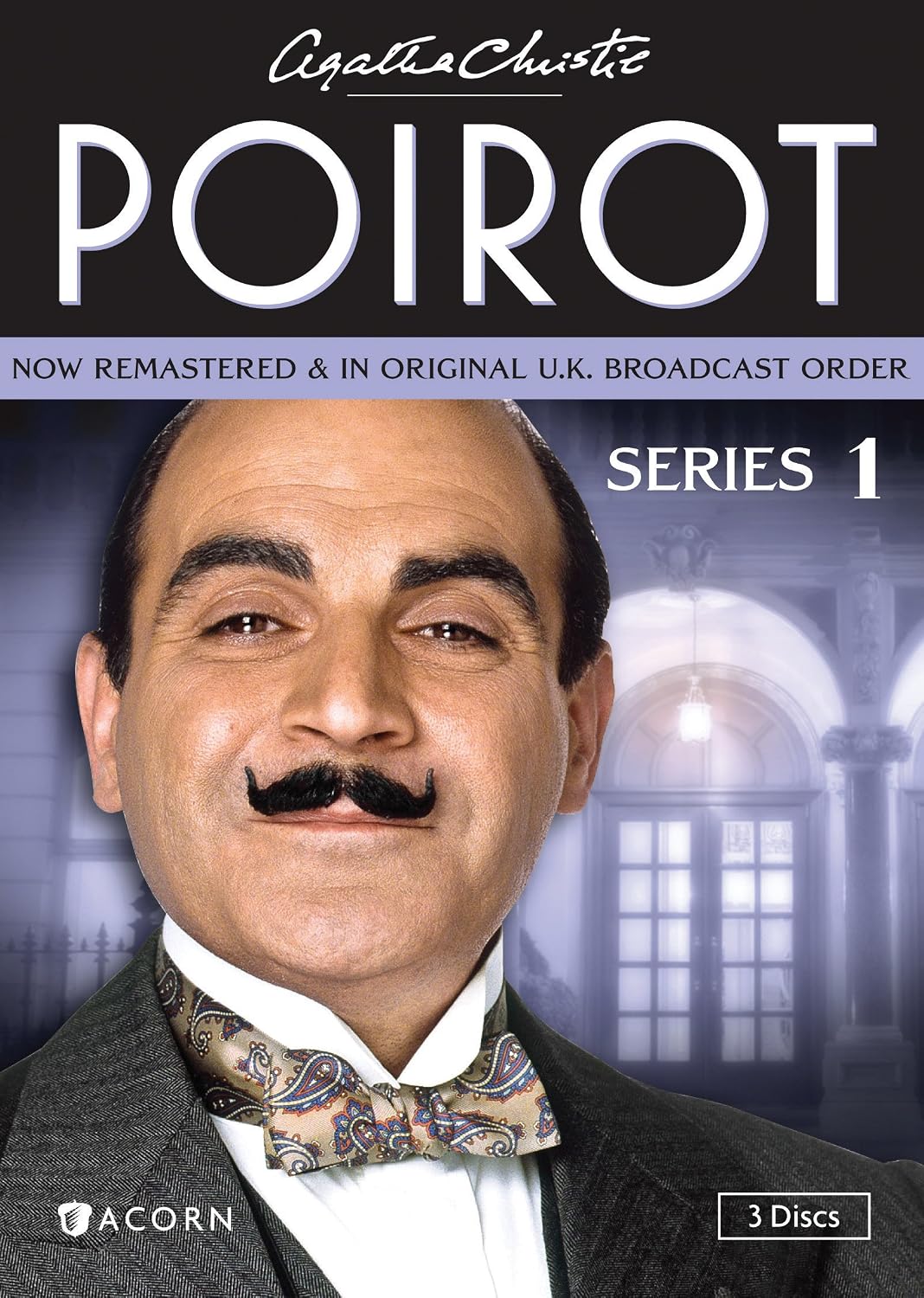
(Not Really a) Review: First Impressions of Poirot

When I looked for period dramas I haven't seen yet, this series appeared in almost every list. At first I was reluctant to start a series where every episode is a different story. Now I've finally got around to starting it, and I wish I'd done it earlier.

Poirot (also called Agatha Christie's Poirot; apparently someone thought there are so many characters named Poirot that viewers might think it's based on some other author's works) is a long-running series that adapts all of Agatha Christie's stories about the title character. Yes, all of them. Unsurprisingly it lasted over twenty years, from 1989 to 2013.

I've never read any of the Poirot novels, and my only previous knowledge of the character was from Murder on the Orient Express. So while I know every episode is about Poirot solving a mystery, I don't know anything about the cases. Turns out that's a good thing. I've watched the first four episodes of the first series, and every time I waited with bated breath to learn whodunnit and why they did it. Only once have I correctly guessed who the criminal is before the case is solved.

I love almost everything about this series. It's unexpectedly funny; Hastings' obsession with tennis and the running joke about Poirot's uncomfortable shirt collars are just two of the things that made me laugh. The cases themselves always end with an unexpected solution. And of course for period drama fans there's the 1930s setting. So I can safely say that this is one series I'll keep watching.

Sunday, 9 February 2020

Review: The Secret Adversary

Finally read an Agatha Christie novel! True, it's not one of her better-known ones. I read it mainly because I couldn't find any copies of the better-known ones.


The Secret Adversary is one of Agatha Christie's earliest works, first published in 1922. It's been adapted into a silent film, two miniseries, a graphic novel, and at least two stage productions.

The main story is set shortly after World War I ended. Tommy and Tuppence are desperate for money, so they decide to start a business: "The Young Adventurers". Almost immediately they get involved in the case of a missing girl, some very important papers, and a criminal mastermind.

It's easy to tell this book was written by an author just starting her career. The story is often rushed, occasionally confusing, and generally shows the signs of an inexperienced writer. (Though it's still miles better than my early works. To start with, it's actually readable.)

The reveal of the villain's true identity is easy to see coming. I guessed it about half-way through, shortly before Mrs. Vandermeyer killed herself. And when Mr. Brown finally confirms who he is, the confrontation is over in a few paragraphs. Not to mention that I was left wondering why he bothered revealing his identity at all. It's a bit too reminiscent of cartoon villains gloating and laughing evilly just so the hero has the chance to foil their plots. Honestly, before his suicide I half expected Mr. Brown to shout "Curses! Foiled again!" or "I could have gotten away with it if it weren't for you meddling kids!".

If you want an entertaining and short novel to read, try this one! Just ignore the contrived events and implausible coincidences.

Is it available online?: Yes, on Gutenberg.

Rating: 7/10.

Sunday, 5 January 2020

Review: Murder on the Orient Express (1974)

Welcome to the first review of 2020! Most people, for obvious reasons, watched this version before the 2017 one. Many insist this is the better adaptation. Do I agree with those people? ...Yes and no.

I prefer this title-card to the 2017 film's. It's much more fitting for a period drama.

This is the first film version of Agatha Christie's novel. Incidentally, there were only two adaptations of her works that she liked, and this was one of them.

Like the 2017 film, this one has an all-star cast. Like many films from years before I was born, I recognise many of the names but haven't seen any of their other films. There were only two who I had seen before:
Ingrid Bergman (Alicia in Notorious 1946) as Greta Ohlsson
Sean Connery (Henry Jones Sr. in Indiana Jones and the Last Crusade) as Colonel Arbuthnot

The film starts with the kidnapping that sets the entire plot in motion. Unfortunately, the way it's filmed makes the characters' movements bizarrely puppet-like. People don't walk normally; they jump around. Most distracting.

Thank goodness the next scene is filmed more normally. There's no sign of Poirot solving a crime in Israel. (Was that an invention of the 2017 film?) We go straight to Poirot waiting for a ferry.

LOL at that poor man who tried to pronounce Arbuthnot's name πŸ˜„ The relationship between Arbuthnot and Miss Debenham is much more overt in this version. I wasn't expecting them to practically run at each other and start kissing.

The train station and the Orient Express itself are much less elaborate than in the 2017 film. Goats right next to the train? That's an accident waiting to happen!

Where are Health and Safety when you need them?

Mrs. Hubbard's complaints made me giggle πŸ˜„ Who wants ice in drinking water anyway?

For some reason Bouc is renamed Bianchi. I can't see why they made such an unnecessary change. And Poirot has another helper, Dr. Constantine. Apparently he was in the novel but removed from the 2017 film.

Like many films from the 70s (and 80s) the colour is somehow... "faded" isn't quite the right word. It's as if there simply are no bright colours in the film. And the picture is not quite grainy, but also not as clear as in more recent films. (Or older films, for that matter; I've never seen this in films from the 40s and 50s.) It must be a problem with the cameras used at the time; it also pops up in Sense and Sensibility (1971) and Pride and Prejudice (1980). Quite a disappointment when compared to the 2017 film's beautiful visuals.

LOL at Ratchett running off under cover of darkness πŸ˜† Poirot's confusion makes it even funnier! There's as much comedy in this as in the 2017 version. I laughed even harder at Poirot's alarm when he learns Mrs. Hubbard is too near him.

I think I prefer this version of how they discover the murder. The 2017 film only showed the tops of everyone's heads. Here we get to see their reactions.

Wait, Cassetti himself didn't kill Daisy? His underling did? I don't remember that in the other film. Unfortunately I've no idea which is closer to the book.

This version emphasises the urgency of solving the crime before the rescuers dig the train out. That's conspicuously lacking from the 2017 film. Actually I was surprised to realise there was any urgency.

My German is even worse than I thought πŸ˜“ I barely understood anything Hildegarde read to the Princess.

I didn't expect Poirot to give his speech solving the crime while still on the train. It seems incredibly cramped and crowded when compared with how the 2017 film portrayed that scene. And it's a much longer speech, too. There were times when I wondered if Poirot would ever get around to revealing who the murderers were. Incidentally, the Princess's outfit in this scene is the strangest thing I've seen this year.

Are those feathers part of her hat, part of her dress, or just a very odd scarf? (Whatever they are, they made me giggle during the least humourous scene in the film.)

The flashback goes into much more detail about how the passengers carried out the murder. I'm not sure what I think about them saying who they're avenging when they stab Ratchett/Cassetti. I can see why they do that, but it strikes me as just repeating what the viewer already knows.

The end is the part I like the least. The passengers don't seem at all upset by what they did, while in the 2017 film they're all clearly shaken and unsure they did the right thing. Poirot, after a brief line about wrestling with his conscience, disappears and we don't see his guilt over letting them go.

Overall I like both adaptations. I prefer the 2017 version's visuals and final scene, but I enjoyed this version too.

Is it available online?: Not as far as I know.

Rating: 7/10.

Wednesday, 1 January 2020

(Not Really a) Review: New Year's Book Resolutions

Happy New Year! πŸ˜ƒ Almost everyone makes New Year's Resolutions today. I'm no exception. But my resolutions are a list of books I intend to read in the New Year. This is the top 5 on my list.


The Warden is the first in the Barsetshire series. I want to read literally anything by Anthony Trollope, and this is the top of the list. If it's anything like Barchester Towers, this book is well-worth reading.


He Knew He Was Right, also by Anthony Trollope, is one of those books I want to read because I saw the miniseries based on it. (I'll review the miniseries. Eventually.) Since I already know the plot it shouldn't take too long to read. Though "shouldn't take too long to read" is not a phrase I'd ever expect to use about a Victorian novel.


It's about time I read an Agatha Christie novel! I chose Murder on the Orient Express mainly because I love the film. Some people don't like reading mystery novels when they already know the ending, but I don't mind. It's always fun to spot the clues along with the detective, and when you know the end you see things you'd never have noticed before.


Lark Rise of Candleford is another of those books I want to read because of its adaptation. But in this case, I want to see just how badly the series butchered it. Unlike the other books on this list I've already started this one. So far it's slow going. It's not actually a novel; it's a collection of scenes from the author's childhood.


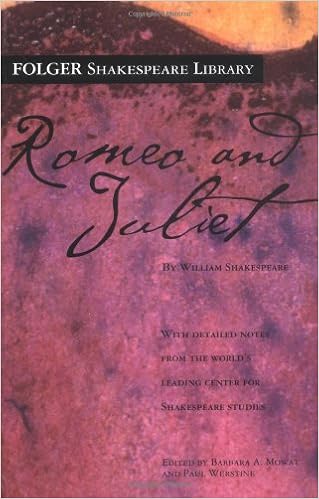
I've only read one of Shakespeare's works before. I was twelve, Much Ado About Nothing was required reading for English... and it might as well have been written in Ancient Egyptian, for all I understood of it. That experience put me off reading any more of his works for years. Now I've decided to try again. Romeo and Juliet is such a well-known play that it should be easy to follow. (I hope.)

Will I manage to read these and the other books on my list? Time will tell. If I review any of them, you'll know I've finished them. If I don't, I probably haven't.

Sunday, 8 December 2019

Review: And Then There Were None (2015)

I have a confession to make, one that will amaze anyone who knows me in real life: I've never read any of Agatha Christie's books. Someone is probably thinking, "How can you be a bookworm and not read her books?" Good question. I want to read some of her books, but I've never got around to it yet. So I was one of the few people to watch this series with only a vague idea of the plot.


And Then There Were None is a 2015 miniseries adapted from the book of the same name by Agatha Christie. It's the first miniseries adaptation, but there have been at least four different film versions. I wrote this review while watching the series, so it's basically a list of my thoughts as I watched it.

There are several recognisable actors.
Anna Maxwell Martin (Esther in Bleak House 2005) as Mrs. Rogers
Charles Dance (Mr. Tulkinghorn in Bleak House 2005) as Wargrave
Burn Gorman (Mr. Guppy in Bleak House 2005) as Blore
Douglas Booth (Pip in Great Expectations 2011) as Marston
Sam Neill (Dr. Grant in Jurassic Park) as MacArthur
Miranda Richardson (Lady Van Tassel in Sleepy Hollow 1999) as Miss Brent
Aidan Turner (KΓ­li in The Hobbit) as Lombard

The opening credits are, not to put too fine a point on it, ugly. I hardly noticed any of the names at first. I was too busy trying to figure out what on earth those hideous green things were supposed to be. The first scenes aren't an improvement. The constant cuts between apparently-unrelated events left me wondering what the heck I was watching.

The series finds a creative way to introduce all the characters. We start with a woman being offered a job she didn't apply for -- something that would have warned most people there was something suspicious going on. Then we abruptly jump to letters being sent to other people, interspersed with those people going about their days. Creative, but confusing.

I like the music; it's suitably ominous. So is the incredibly bleak island the characters go to. What sort of island has massive cliffs in the middle of it?!

Is this an island or the Loch Ness Monster?

Imagine trying to write a tourist brochure for this island! An idyllic destination for anyone who likes to spend their holidays terrified of falling. If you don't have a fear of heights already, this place will give you one.

Ugh, the hideous green things reappear. Now I'm fairly sure they're supposed to be statues. Statues that look like the first attempts of a clumsy amateur statue-maker who made them while blindfolded πŸ˜’

What are those servants up to? At first I thought they were Mr. and Mrs. Owen in disguise. I'm trying very hard not to look up the book's plot, but the series takes ages to explain anything. At this rate I'll have to consult Wikipedia just to understand what's happening.

None of the characters are admirable, but Lombard stands out as a disgusting creep 😠

Love the scene where darkness literally covers the island! It's incredibly eerie, and the symbolism is obvious without being obnoxious.

The flashbacks to the murders are chilling 😨 I was wrong when I said Lombard's a disgusting creep. He's a complete monster 😱 I know enough of the plot to know most of the people on the island die. But I didn't expect the first death would happen so suddenly 😨

Episode two begins with two dead guests and two missing statues. (Thank goodness there are two less of those eyesores!) Sometimes this series feels more like horror than mystery. The way the camera lingers on the axe is honestly terrifying.

Some parts of the plot remind me a lot of Murder on the Orient Express. Most notably when everyone realises the killer is one of the guests.

As if the whole thing isn't creepy enough, the series just has to go the "dark and stormy night" route. Complete with lights going out, windows blowing open, and the moon going behind a cloud. And another murder, of course. Possibly the goriest yet 😱

Hiding a key and a gun in a bearskin rug? What a weird place to hide anything. Though I guess it worked; no one found the key. Yet.

It took me until the opening credits of episode three to realise that title card isn't just a mass of cracked statues; it's in the shape of the island and the house. Now I feel stupid for not noticing it earlier.

Someone clearly thought there wasn't enough horror in the series, so they showed some of the guests imagining their victims are in their rooms. I'm not sure if those are supposed to be hallucinations or if we're meant to believe they're actual ghosts. Either way, they're terrifying. Especially the hand in the sink πŸ˜¨

Oh, for goodness' sake. A horror/mystery series is much better off without a romance subplot, but they just had to shoehorn one in here anyway. Not only does it interrupt the suspense, it's utterly out of place. And between the most despicable guest and the closest the series has to a main character, too. I don't know if it was in the book. Even if so, it should have been left out of the series.

What on earth? The bearskin rug came to life?! That had better be another hallucination πŸ˜’

I suspect the director wanted Lombard's death to be sad. The "romance" earlier only makes sense if you think it's meant to turn later events into a tear jerker. Unfortunately, Lombard was such a vile character that I didn't feel sorry for him at all. And the way Vera shrieked and hopped around just looked silly.

THE JUDGE WASN'T DEAD?????? And he was behind the whole thing? ...I should probably have guessed. Any character played by Charles Dance is practically guaranteed to be a villain.

The final scene is possibly the most disturbing in the whole series. Even if anyone finds all the bodies, they'll have no idea what really happened or who the killer was. Creepy.

Overall I quite enjoyed this series. I don't know how faithful it is to the book, but as a story in its own right it's fairly good. My main problem with it is how utterly despicable all the characters are. I know that's the point of the series, but I prefer stories with at least one relatively decent character.

Is it available online?: I doubt it.

Rating: 6/10.

Sunday, 24 March 2019

Review: Murder on the Orient Express (2017)

I've seen plenty of whodunnits. But this is the first time I've watched a film where the question is instead "who didn't do it?"

Can't say I'm a fan of this title card. It's awfully plain for a film that's full of beautiful cinematography.

Murder on the Orient Express is based on one of Agatha Christie's better-known novels. I've never read it or any of her other novels (shocking, I know), so I was one of the few people who didn't know the twist ending before I watched the film.

There's a long list of familiar faces (and actors whose names I recognised but whose other films I've never seen):
Kenneth Branagh (Lockhart in Harry Potter) as Poirot
Judi Dench (Miss Matty in Cranford) as Princess Dragomiroff
Daisy Ridley (Rey in Star Wars) as Mary
Hadley Fraser (Raoul in The Phantom of the Opera 25th Anniversary) as an unnamed soldier
Leslie Odom Jr. (Burr in Hamilton) as Dr. Arbuthnot
Johnny Depp (Jack in Pirates of the Caribbean) as Ratchett/Cassetti
PenΓ©lope Cruz (Angelica in Pirates of the Caribbean) as Pilar
Derek Jacobi (Nell's grandfather in The Old Curiosity Shop 2007) as Masterman

The story starts with Poirot solving a crime in Israel. This case has nothing to do with the main plot, but it establishes Poirot's skill as a detective and is pretty interesting to watch. I laughed when the criminal tries to escape... only to run into Poirot's walking stick πŸ˜„

Poirot

Poirot goes to Istanbul, where he gets on the Orient Express... and meets his fellow passengers, many of whom are a bit odd. (To say the least!) We get some truly beautiful scenery as the train travels towards its destination.

Some of the amazing scenery in this film.

There are also some amusing interactions between the passengers. I laughed at the "I brushed Dalia this morning." "No, you tortured my darling doggy." conversation. And I loved the scene of Poirot reading A Tale of Two Cities -- though I have to wonder what he was laughing at. Of all Dickens' books, that one's second only to Great Expectations for "fewest comical scenes". There's certainly very little that would make anyone laugh out loud in it.

The train is caught in an avalanche and stuck in place until someone comes to dig it out. That's when the inevitable happens: someone is murdered. Poirot and his friend Bouc are the only people who aren't suspects. So they start questioning the other passengers.

Why is the discovery of the murder filmed from the ceiling? It's impossible to see anyone's reactions when the camera is focused on the tops of their heads. Most of the movie is beautifully filmed, so surely they could have found a way to shoot that scene while letting the audience see the characters' faces.

Speaking of the way scenes are filmed, I'm not a fan of those bits in the dining room where the characters are seen through glass. It's blurry and disorientating. But I suppose it fits the mood of the scene.

Ratchett, the victim, was a thoroughly unpleasant man who had received threatening letters. The window to his carriage was found open. Even when I watched this for the first time and didn't know the ending, I knew the open window was a red herring. No way would a murder mystery have such a neat, easy-to-solve crime.

Poirot and Bouc examining the body. Another scene inexplicably filmed from above.

Would someone please explain what that kimono has to do with the plot? I can understand the conductor's uniform, but the kimono is just... odd.

It's revealed Ratchett was really a kidnapper and murderer named Cassetti. Poirot finds a note that shows Ratchett/Cassetti was killed by someone avenging the Armstrongs, the family Ratchett (directly and indirectly) killed.

Not only is this film a murder mystery, it's an exercise in foreign languages. Poirot speaks French several times through the film, and I was embarrassed to discover just how bad my grasp on spoken French is. It took me a long time to realise he was saying "allons-y" in the final scene πŸ˜“ On the bright side, I was astonished when I understood half of what Poirot and Schmidt said in German, without the help of subtitles. Progress!

Some of the passengers apparently set out to make themselves as suspicious as possible. What on earth was MacQueen thinking when he decided to burn evidence? All right, so he probably panicked and didn't think, but that's exactly the behaviour that will make a detective investigate even more.

I'm very impressed with everyone's acting. I don't think there's a single weak performance among the entire cast. Even character who have very few scenes or lines are completely convincing.

Poirot accuses Miss Debenham of being the murderer. Dr. Arbuthnot tries to kill him and claims he was the murderer. In the process he answers Poirot's remaining questions and lets him solve the case quicker. I spent this entire scene going "it was her-- no, him-- no, someone else-- no, both of them..." But I never expected the actual solution.

All the suspects

I love Poirot's little speech just before he solves the crime. It's suitably awesome for such a dramatic moment.
"You tell your lies and you think no one will know. But there are two people who will know. Yes, two people. Your God, and Hercule Poirot."

Almost everyone already knows who the murderers were, but still: SPOILERS!

At first I couldn't believe that literally everyone in the carriage had murdered Cassetti. But as the denouement continued, an awful lot of things began to make sense. I still don't know what was up with Miss Debenham wearing that kimono, though. It seemed to have nothing to do with the case. Were they trying to send Poirot on a wild goose chase?

In most films, twelve people who stabbed a man to death would not be the sympathetic characters. But it's impossible not to pity them. I burst into tears at the flashback to Pilar being unable to stop Ratchett kidnapping Daisy. And the tears just got worse from then on. Especially when we learn who Mrs. Hubbard really is. And when she picks up the gun... 😭

Just to make things even sadder, we get Poirot's "letter" to Colonel Armstrong. πŸ˜­πŸ˜­ Even the final scene of the train slowly moving away is pretty depressing 😒 I had to laugh, though, at Poirot getting off the train only to be asked to solve another murder. He just can't get a proper holiday!


This film has very quickly become one of my favourites. I don't know how close it sticks to the novel, but it's a good film on its own. I'm impatiently waiting for the sequel. Hopefully it won't fall victim to the flaws that sequels often suffer from.

Is it available online?: I don't think so.

Rating: 9/10.