Wednesday, 29 April 2020

Review: The Longest Day in Chang'an

Every so often you come across a good series that's just too long. I suppose I should have expected it, considering the title. But seriously, forty-eight episodes (mostly) covering a single day?!


The Longest Day in Chang'an is a 2019 Chinese drama based on the novel of the same name by Bo Yong Ma. Unlike most Chinese period dramas, the setting is apparently very historically accurate. (The plot, on the other hand, is fiction. Though many of the characters were real people.)

I only recognised one actor, and he's one of the last people I expected to see in a Chinese drama:
Djimon Hounsou (Korath in Guardians of the Galaxy) as Ge Lao

On the surface the plot seems simple enough. A group of terrorists sneak into Chang'an, capital of the Tang dynasty, a day before the Lantern Festival. Their goal is to blow up the Lantern Tower and kill the emperor -- and hundreds of other people. Li Bi, head of the Peacekeeper Corps, recruits Zhang Xiao Jing, a condemned criminal, to help him find the terrorists.

Li Bi

Zhang Xiao Jing

Of course, it's a lot more complicated than that. A story that could have been told in about thirty episodes is stretched out to fill forty-eight. Unfortunately the result is that it frequently drags. I had to keep reminding myself that most of the events were happening in a single day. It felt more like the series covered at least a week. Until approximately the last ten episodes there was very little sense of urgency because everything was happening so darn slowly.

What's even worse is the placement of the flashbacks. They interrupt the story right when events are starting to speed up. Picture this: Long Bo and his cronies have placed explosives in the Lantern Tower. Li Bi is held hostage there. Zhang Xiao Jing is still trying to find the terrorists. Then the next episode leaves them hanging (literally, in Li Bi's case) and is almost entirely a flashback. My response was incoherent rage. Seriously?! They end an episode with a cliffhanger and then don't resolve it in the next episode? 😠

The series is unexpectedly dark and gory, especially for a C-drama. When I started it I never thought it would include nightmarish things like Tan Qi being buried alive or Yu Chang cutting off her own arm 😱

Overall it's a fairly good series. All the actors do an excellent job, and the cinematography is incredible. I enjoyed it a lot. I just would have enjoyed it more if it was shorter, and if they'd handled the flashbacks better.

Is it available online?: The first three episodes are on YouTube. The whole series is on Viki, and apparently also on Amazon Prime. (Currently only the first six episodes are available to the general public on Viki. You need to be a paying member to watch the rest of it.)

Rating: 6/10.

Sunday, 26 April 2020

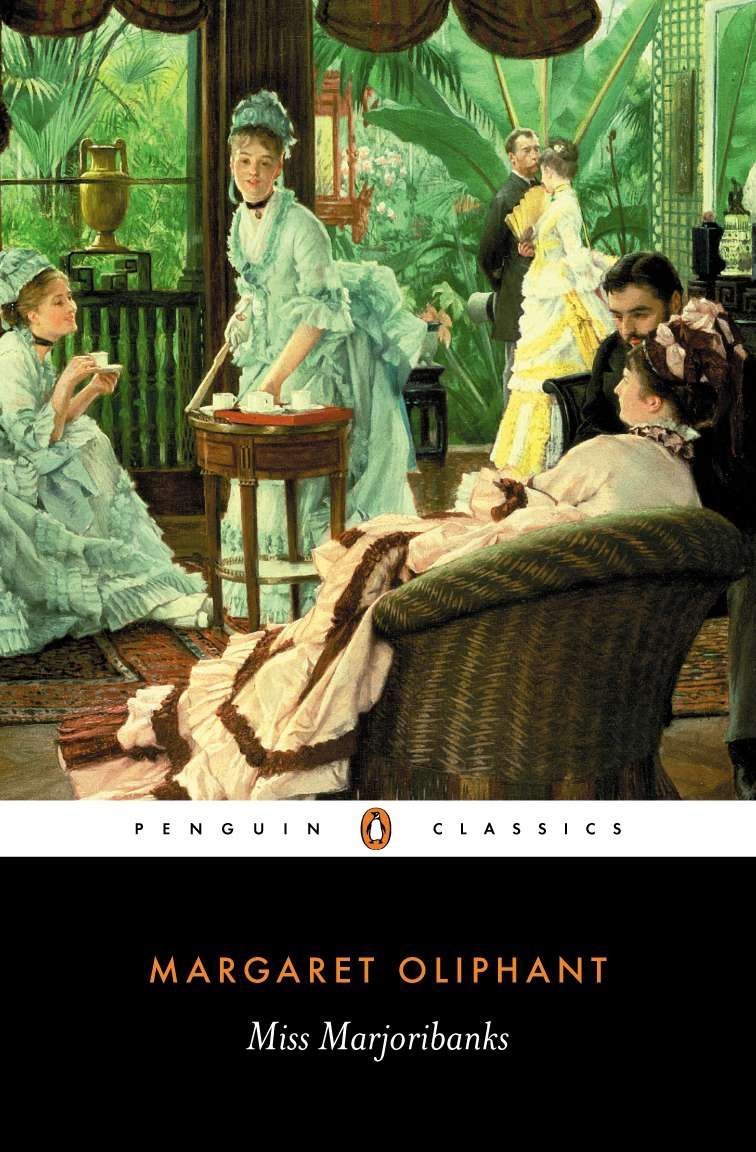
Review: Miss Marjoribanks

I'm back! Last Thursday I finished my Camp NaNo project, so I finally have time to review things again. (Far too much time, actually. This damn lockdown is driving me up the wall.) I read this book during NaNo, in-between frantically scribbling chapters. So now it's time to review it.


Miss Marjoribanks is an 1866 novel by Margaret Oliphant, an author I'd never heard of before reading this book. It's part of her Chronicles of Carlingford series. So far it's never been adapted.

Miss Lucilla Marjoribanks (pronounced "Marchbanks", illogical though it sounds) is determined to improve Carlingford society. So she starts hosting parties, and in the process causes a great deal of trouble for herself and other people.

In some ways this book reminds me of Cranford or Wives and Daughters. In other ways it's reminiscent of Emma. The first two-thirds are the often-humourous account of Lucilla's parties and her attempts to be a comfort to her father. The last third abruptly jumps ten years into the future, has a more serious tone, and describes Lucilla's interest in an election.

Personally I found the first part the more interesting. It was great fun to see how Lucilla overcame every possible problem, while being completely oblivious to all the other problems her actions were causing. The last part was frankly disorientating. Suddenly the reader is confronted with a time skip and introduced to a completely new character and subplot. It's as if the author ran out of ideas so she decided to change genre. I skimmed most of the last few chapters.

By far the weakest part is the implausible coincidence of Tom arriving home for the first time in years, at the very moment when Lucilla is about to be proposed to. That's one of the most contrived things I've read all year.

Overall, though, Miss Marjoribanks is an interesting and sadly-overlooked novel by a sadly-overlooked author. It's a pity no one has made an adaptation of it yet. If done well it would make a great period drama.

Is it available online?: Yes, on Gutenberg.

Rating: 6/10.

Sunday, 29 March 2020

Review: The Chronicles of Narnia: The Silver Chair (novel)

Camp NaNoWriMo starts on Wednesday. Depending on how well it goes, I may not be able to keep to the posting schedule. So this might be the last review until it's over.


The Silver Chair is the sixth novel of the Narnia series, but when it was published in 1953 it was the fourth book. It was adapted by the BBC in 1990. A film version is reportedly being made. (Don't hold your breath waiting for it.)

Like most of the books, the plot starts when people from our world find themselves in Narnia. Unlike the others, the Pevensies are nowhere to be seen. Instead the main characters are Eustace Scrubb, whose experience on the Dawn Treader has made him a much nicer boy, and Jill Pole, who's never appeared in earlier books.

As usual years have passed in Narnia. Caspian is now an old man, Trumpkin is mostly deaf and even more crabby than before, and Caspian's nameless wife is long dead. His son Rilian has mysteriously disappeared. So Aslan calls Jill and Eustace, gives Jill four signs she mustn't forget, and sends them to find Rilian. Their trip takes them to never-before-seen parts of Narnia, accompanied by a member of a never-before-seen species: Puddleglum, a wonderfully, well, glum Marsh-wiggle.

The book isn't quite as good as the earlier installments. When I first read it I was disappointed the Pevensies were barely even mentioned. The Marsh-wiggles are sadly underused. They're mentioned only in this book (The Last Battle doesn't count), and Puddleglum is the only one who ever actually appears. C. S. Lewis had a habit of creating fascinating parts of Narnia's world and then never elaborating on them. (The same thing happened with the winged horses way back in The Magician's Nephew.)

But it has enough good points for it to be my third-favourite book. It gives a glimpse of how large the world of Narnia really is; something that's easy to forget when Narnia itself is usually the focus of the stories. And Puddleglum is one of my favourite characters in the whole series. His delightfully gloomy comments are always good for a laugh 😆

Is it available online?: Not as far as I know.

Rating: 7/10.

Wednesday, 25 March 2020

Review: The Magnificent Century Season 1

It took me ages to make any progress with this drama. At last, after many breaks when I just couldn't be bothered watching it, I've decided to drop it. Here are my thoughts on what I did watch, and why I lost interest.


The Magnificent Century/MuhteÅŸem Yüzyıl is a Turkish series that aired from 2011 to 2014. It was followed by a sequel, The Magnificent Century: Kösem, in 2015.

I didn't recognise any of the actors, so on to the plot.

The series revolves around Alexandra/Hürrem, starting when she's kidnapped and forced to become one of the Sultan's concubines. She eventually becomes Suleiman's legal wife, in spite of the other concubines plotting against her.

As I said in my first impressions of the series, the main problem with the story is how it pretends a deeply dysfunctional relationship is a grand romance. (I have no idea what happened historically; this is entirely the series' highly fictionalised version of events.) Alexandra loses her parents, her fiancé, her home, her language, her religion, and even her name when she's brought to the palace, but she's only upset about any of this for about half an episode. Then she falls in "love" with Suleiman and starts plotting to gain his favour like all the rest of the concubines.

In any other series that would be the grim, depressing tragedy of a woman who has everything taken from her and has no choice but to adapt to her new "home" to survive. This series pretends everything's just fine and dandy and look, Suleiman really loves Hürrem even though she's just one of God-knows-how-many concubines! Not to mention that part where he slept with Hürrem's former friend while Hürrem was giving birth to his child. There's no way to view that as a romance. It's more disturbing than some true crime documentaries I've seen.

The series doesn't even have the benefit of being interesting. It's incredibly repetitive. Every episode was another rehash of the "Mahidevran plots again Hürrem" story. Nor could I sympathise with any of the characters. They're all doing their best to destroy their own and everyone else's lives, and after the first two episodes all of them blurred together.

So, after eight painful and infuriating episodes, I've given up this series and have no intention of ever returning to it.

Is it available online?: It's on YouTube. I can't be bothered giving a link.

Rating: 1/10.

Sunday, 22 March 2020

Review: Hard Times (novel)

Some of Charles Dickens' novels are rightly regarded as masterpieces. Others are more obscure. This is one of his little-known works, and for good reason.


Hard Times is Charles Dickens' tenth novel, first published in 1854. It's the shortest novel he ever wrote, with a conspicuous lack of the many subplots and colourful characters he's known for. It's been adapted into a silent film, two miniseries, and at least one stage version.

In some ways the story is reminiscent of North and South. It's set in a grim manufacturing town, and features trade unions, mill owners, and the misery of people who work in the mills. But it's also a harsh criticism of the sort of schooling that relies entirely on facts, with disastrous consequences.

My opinion of the book is divided between loving some of it and being bored by the rest. Sissy is the only character I truly like. Louisa frequently infuriates me -- especially when she married Bounderby. She hated him and no one forced her to marry him, so why accept his proposal?! 😒 On the other hand, the scene where she confronts her father and calls him out for his terrible parenting is my favourite part of the book. All the other characters are either boring or despicable. Tom manages the extraordinary feat of being both.

For such a short novel, Hard Times is relentlessly depressing. Everyone suffers whether they deserve it or not. Even the ending is bittersweet at best. It's easy to see why this book is largely forgotten. I'd recommend it only for people who are already Dickens fans and/or don't mind books full of endless misery.

Is it available online?: Yes, on Gutenberg.

Rating: 6/10.

Wednesday, 18 March 2020

Review: The Terror (2018)

I watched this series last year and meant to review it after finishing it. Of course, being the scatterbrain I am, I promptly forgot all about it until now. I known I've forgotten a lot about the series, but I remember enough to give my general thoughts on it.


The Terror is a 2018 period drama/horror miniseries, based on the 2007 novel of the same name, which in turn is loosely based on Franklin's lost expedition. I haven't read the book, so I don't know how closely it sticks to it. A second season aired in 2019; it was unrelated to the novel and set in an entirely different place and era.

I only recognised a few actors:
Jared Harris (King George VI in The Crown) as Crozier
Tobias Menzies (Prince Philip in The Crown season three) as Fitzjames
Ciarán Hinds (Edward Rochester in Jane Eyre 1997) as Franklin
Alistair Petrie (Major Gordon in Cranford) as the doctor
John Lynch (Nemo in Bleak House 2005) as Bridgens

The series starts with the expedition's two ships, Terror and Erebus, getting stuck in ice. Things quickly go from bad to worse when a monstrous bear starts hunting the crew -- and an equally monstrous member of the expedition starts killing those lucky enough to escape the bear.

I have to admit, it was a chore to stay interested in the series. The very first scene makes it clear almost everyone's going to die. That removed all suspense at once, and all that remained was to see how they died. It also meant I didn't care for any of the characters. What's the point of getting attached to people who you know will die horribly? (And very few of them are likeable anyway.)

After reading the plot summary I expected the Tuunbaq would be the main villain. Well, it's certainly one of them, but Hickey is arguably even worse. Not to mention the Tuunbaq has surprisingly little screentime. And its death is a real anticlimax. The rest of the series built it up as some supernatural monster that can eat souls, then it... eats Hickey and chokes to death. Or maybe he poisoned it; he was certainly vile enough. Either way, that left me wondering just what it was supposed to be. A real animal? A spirit? Some weird combination of the two?

The series has its good moments. (Since it's a horror series, "good" means everything from "suspenseful" to "terrifying".) The Tuunbaq's attacks stand out. I would probably have been more interested if it hadn't revealed the characters' fates in the first five minutes. As it is, it's not one of my favourites, and I'm not likely to watch it again.

Is it available online?: Not as far as I know.

Rating: 5/10.

Sunday, 15 March 2020

(Not Really a) Review: First Impressions of The Magnificent Century

After several years of thinking "I want to watch this" and promptly forgetting all about it, I've finally managed to start this series.


The Magnificent Century is a Turkish historical fiction series based on the life of Hürrem, wife of Suleiman the Magnificent. This is the first time I've ever watched a Turkish drama. The first thing that struck me was how long the episodes are. Episode one alone is over one hour and forty minutes. I've seen films that aren't that long. Somehow I suspect it will take me ages to finish the series.

To be honest, I've never given much thought to Turkish history. What I knew about it before this series could be boiled down to three things: the Turks fought Dracula (the historical figure, not the fictional vampire named after him); whoever got the throne murdered all his brothers; and Turkey has a habit of committing genocide and lying about it. Even if the series isn't historically accurate, it still taught me about the sultanate of women and the existence of people I'd never heard of before.

Even if the story is sometimes predictable, the series is worth watching for the costumes alone. (Fun fact: I only learnt it existed by seeing pictures of the costumes on Pinterest and Tumblr.)

I've only watched the first episode, and I can already tell what my biggest problem will be with the story. Alexandra, later renamed Hürrem, was kidnapped from her home, taken to a foreign country, and made one of Suleiman's concubines against her will. It looks ominously like the series is going to portray their relationship as some grand romance. No, no, no. Setting aside whatever happened in real life, the series' version of events is disturbingly reminiscent of Stockholm syndrome.

So far I'm ambivalent towards this series. It's not utterly atrocious, but I doubt it will ever be one of my favourites. I'll write a longer review when (if) I finish it.