A hallmark of Jules Verne's novels is the frequent lectures on chemistry, geography, technology, and other subjects. Half of this novel is a science fiction story. The other half is a sometimes out-of-date marine biology textbook.
Twenty Thousand Leagues Under the Sea (a more accurate translation is Twenty Thousand Leagues Under the Seas) is an 1871 novel by Jules Verne. It's one of his best-known works and has been adapted frequently; the most famous adaptation is of course the 1954 Disney film. It was followed by a sequel, The Mysterious Island, which I haven't read yet. Technically it's the second in a trilogy, preceded by In Search of the Castaways AKA The Children of Captain Grant, but it has no connection with the first book.
I watched the film before I read the book. So I expected the book would be like the film. Turns out, it isn't. What's even more surprising is that I actually like the film better.
Almost everyone knows the plot. Professor Arronax and his servant Conseil join the hunt for a sea monster. The sea monster turns out to be a submarine: the Nautilus, owned by the mysterious Captain Nemo. Arronax, Conseil, and their friend Ned Land become Nemo's prisoners, and travel all over the world before they finally escape.
The book is quite short. Unfortunately almost half of it is taken up with lists of the fish Arronax sees, technical details about how the Nautilus works, and other decidedly boring statistics. When I read a science fiction novel I expect it to be actually fiction. If I want a science lesson I'll just find a textbook.
Unlike the film the book doesn't end with Nemo's death. Our heroes sneak off the Nautilus (how they manage it is never explained), and Nemo's fate is left uncertain. Apparently The Mysterious Island explains it. But without reading that book, this one's ending is very unsatisfactory.
Is it available online?: Yes, on Gutenberg. (This is one of the best translations.)
Rating: 6/10.
Reviews of books, period dramas, and a few other things. Updates every Sunday and Wednesday.
Sunday, 10 May 2020
Wednesday, 6 May 2020
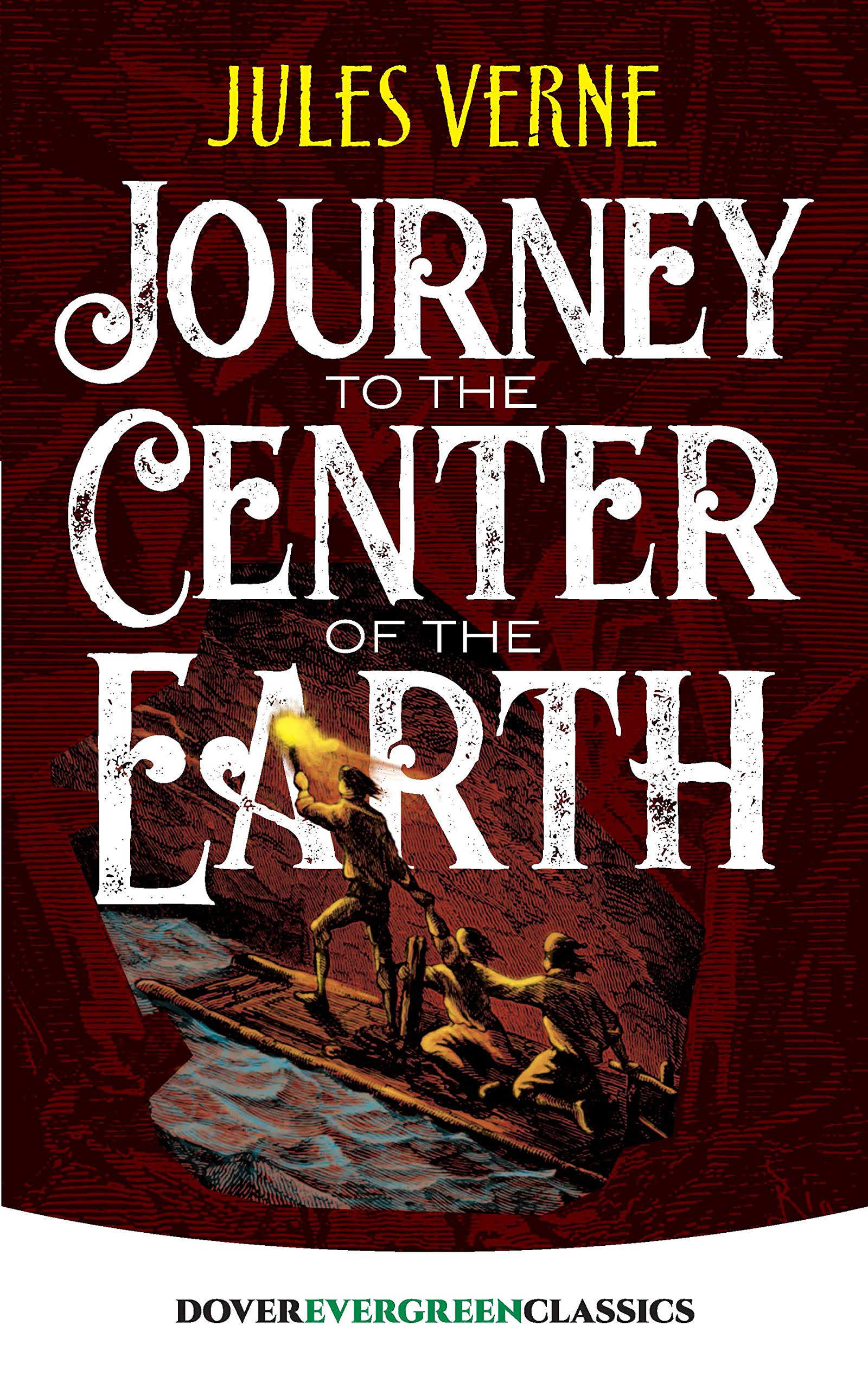
Review: Journey to the Centre of the Earth (novel)
Jules Verne was a good author. Unfortunately his works have been subjected to many, many terrible translations.
Journey to the Centre of the Earth is an 1864 novel by Jules Verne. It's the third of his Extraordinary Voyages novels, and one of his best-known works. It's been adapted into at least four films and three miniseries. None of the adaptations stay close to the book.
The basic story is the same in both the original novel and the bad translations. Professor Lidenbrock and his nephew Axel find a mysterious message from a long-dead explorer claiming to have reached the centre of the earth. They immediately -- and reluctantly, in Axel's case -- go to Iceland, climb into a volcano, and set off for the earth's centre.
The translation I read made mincemeat of the novel, yet it still managed to be an interesting story. Unfortunately I can't read anything more complicated than basic French, and I don't know how to find a good translation. I suspect the translator responsible for what I read also couldn't read French. To start with, they changed the characters' names. Lidenbrock became Hardwigg and Axel became Harry. Apparently they also added scenes. I couldn't make heads or tails of Axel/Harry's bizarre dream(?) about a giant ape until I learnt it wasn't in the original novel.
I realised pretty quickly that I'd got one of the worst translations. When you read translated novels regularly you learn to spot the hallmarks of a subpar translator. If you're lucky you'll just get clunky prose. If you're unlucky, most of it's complete gibberish. But I persevered. As long as I reminded myself that the bad writing was the translator's fault and not Verne's, I could almost ignore it and focus on the plot.
Luckily the plot itself makes up for the translation. Sure, it's not at all plausible or scientifically accurate -- something the characters themselves comment on. But it's so interesting I had trouble putting it down.
If you find a good translation, this book is definitely worth reading. Unfortunately it's very difficult to tell which translations are good and which ones shouldn't be touched with a barge-pole. Even if you get one of the worse ones, you'll probably still enjoy the story -- though some scenes might leave you scratching your head.
Is it available online?: Yes, on Gutenberg. (Apparently this version is one of the better translations.)
Rating: The version I read gets 2/10. The story itself gets 7/10.
Sunday, 3 May 2020
(Not Really a) Review: The Three K-dramas I've Watched So Far
As you probably know by now, I've watched several Chinese dramas. Korean dramas, on the other hand, are a rabbit hole I haven't really fallen down yet. Here are my thoughts on the three dramas I have seen.
Goblin (also called Guardian: The Lonely and Great God) is one of the most famous K-dramas ever made. It's also the first one I watched from beginning to end. My thoughts: ...well, it's certainly good. At times it's heartwarming, at times it's depressing, and some parts of it made me roar with laughter.
There's just one problem. The far-too-large (and too obvious) age gap between the main couple. I simply can't ship an immortal man with a girl who's still in high school. Not only that, but their interactions feel far more friendly/familial than romantic. I would have enjoyed the series more if it had removed the romance and instead focused on the zany antics of the immortal goblin and the grim reaper who somewhat reluctantly become housemates.
Rating: 7/10.
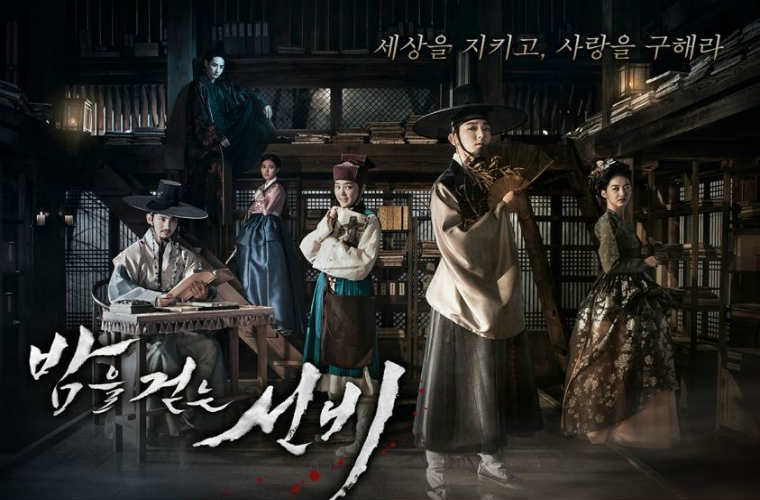
Scholar Who Walks the Night is based on the manhwa of the same name (which I haven't read yet). If it stays close to the source, then the manhwa isn't very good. If it doesn't, then the adaptation isn't very good. Basically, it's about vampires. In Joseon. Fighting over who gets the throne. Insane though that premise is, it could have been turned into something quite good. Unfortunately most of the series is silly and/or boring.
Ironically the best part of it is the villain. I fast-forwarded each episode until I found Gwi's next scene. He's a manipulative, despicable monster, but he's much more interesting than the heroes. I was honestly disappointed when he died.
Rating: 4/10.
The King in Love (also called The King Loves) is based on the novel of the same name, which in turn is loosely based on historical events. Verdict: yet another series with a clumsily shoehorned-in love triangle. The historical and political part of the story is interesting. But at least twice in every episode the plot comes to a screeching halt while Won, San and Rin angst and sulk about their romantic woes.
By far the worst part is the ending. We never find out how Rin survived that fall. I'd just accepted he was dead when suddenly he reappears without a word of explanation. There went my suspension of disbelief 😒
Rating: 6/10.
Wednesday, 29 April 2020
Review: The Longest Day in Chang'an
Every so often you come across a good series that's just too long. I suppose I should have expected it, considering the title. But seriously, forty-eight episodes (mostly) covering a single day?!
The Longest Day in Chang'an is a 2019 Chinese drama based on the novel of the same name by Bo Yong Ma. Unlike most Chinese period dramas, the setting is apparently very historically accurate. (The plot, on the other hand, is fiction. Though many of the characters were real people.)
I only recognised one actor, and he's one of the last people I expected to see in a Chinese drama:
Djimon Hounsou (Korath in Guardians of the Galaxy) as Ge Lao
On the surface the plot seems simple enough. A group of terrorists sneak into Chang'an, capital of the Tang dynasty, a day before the Lantern Festival. Their goal is to blow up the Lantern Tower and kill the emperor -- and hundreds of other people. Li Bi, head of the Peacekeeper Corps, recruits Zhang Xiao Jing, a condemned criminal, to help him find the terrorists.
Li Bi
Zhang Xiao Jing
Of course, it's a lot more complicated than that. A story that could have been told in about thirty episodes is stretched out to fill forty-eight. Unfortunately the result is that it frequently drags. I had to keep reminding myself that most of the events were happening in a single day. It felt more like the series covered at least a week. Until approximately the last ten episodes there was very little sense of urgency because everything was happening so darn slowly.
What's even worse is the placement of the flashbacks. They interrupt the story right when events are starting to speed up. Picture this: Long Bo and his cronies have placed explosives in the Lantern Tower. Li Bi is held hostage there. Zhang Xiao Jing is still trying to find the terrorists. Then the next episode leaves them hanging (literally, in Li Bi's case) and is almost entirely a flashback. My response was incoherent rage. Seriously?! They end an episode with a cliffhanger and then don't resolve it in the next episode? ðŸ˜
The series is unexpectedly dark and gory, especially for a C-drama. When I started it I never thought it would include nightmarish things like Tan Qi being buried alive or Yu Chang cutting off her own arm 😱
Overall it's a fairly good series. All the actors do an excellent job, and the cinematography is incredible. I enjoyed it a lot. I just would have enjoyed it more if it was shorter, and if they'd handled the flashbacks better.
Is it available online?: The first three episodes are on YouTube. The whole series is on Viki, and apparently also on Amazon Prime. (Currently only the first six episodes are available to the general public on Viki. You need to be a paying member to watch the rest of it.)
Rating: 6/10.
Sunday, 26 April 2020
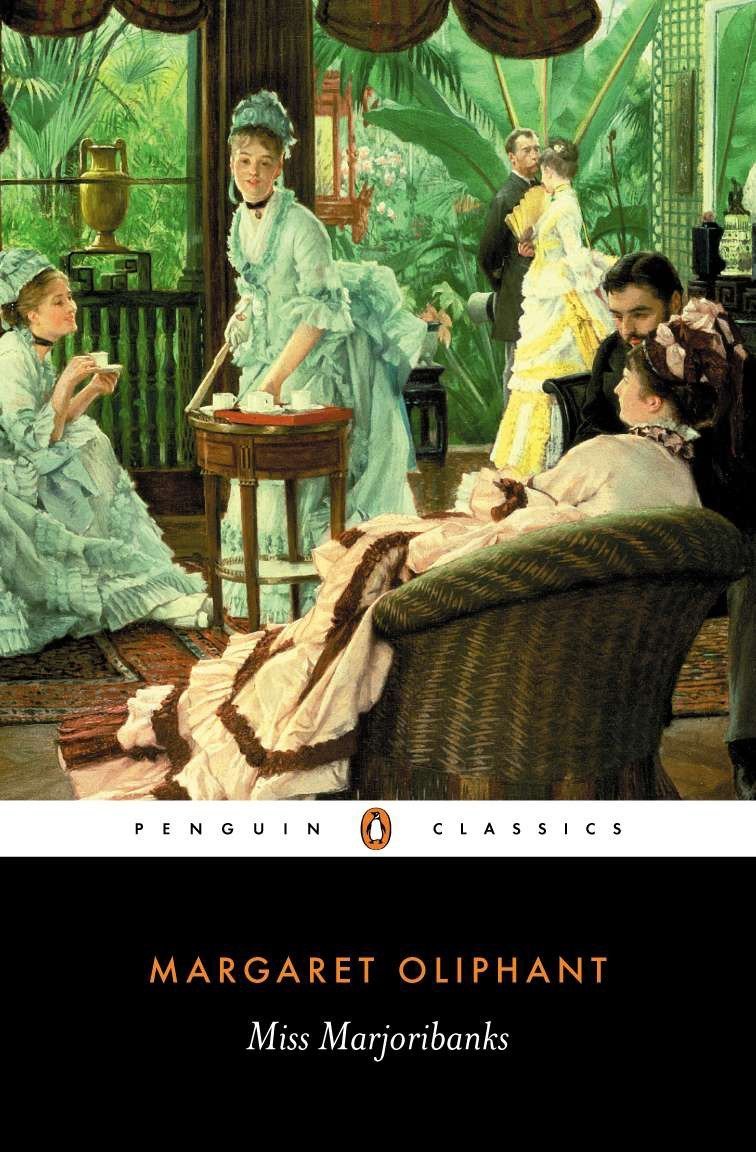
Review: Miss Marjoribanks
I'm back! Last Thursday I finished my Camp NaNo project, so I finally have time to review things again. (Far too much time, actually. This damn lockdown is driving me up the wall.) I read this book during NaNo, in-between frantically scribbling chapters. So now it's time to review it.
Miss Marjoribanks is an 1866 novel by Margaret Oliphant, an author I'd never heard of before reading this book. It's part of her Chronicles of Carlingford series. So far it's never been adapted.
Miss Lucilla Marjoribanks (pronounced "Marchbanks", illogical though it sounds) is determined to improve Carlingford society. So she starts hosting parties, and in the process causes a great deal of trouble for herself and other people.
In some ways this book reminds me of Cranford or Wives and Daughters. In other ways it's reminiscent of Emma. The first two-thirds are the often-humourous account of Lucilla's parties and her attempts to be a comfort to her father. The last third abruptly jumps ten years into the future, has a more serious tone, and describes Lucilla's interest in an election.
Personally I found the first part the more interesting. It was great fun to see how Lucilla overcame every possible problem, while being completely oblivious to all the other problems her actions were causing. The last part was frankly disorientating. Suddenly the reader is confronted with a time skip and introduced to a completely new character and subplot. It's as if the author ran out of ideas so she decided to change genre. I skimmed most of the last few chapters.
By far the weakest part is the implausible coincidence of Tom arriving home for the first time in years, at the very moment when Lucilla is about to be proposed to. That's one of the most contrived things I've read all year.
Overall, though, Miss Marjoribanks is an interesting and sadly-overlooked novel by a sadly-overlooked author. It's a pity no one has made an adaptation of it yet. If done well it would make a great period drama.
Is it available online?: Yes, on Gutenberg.
Rating: 6/10.
Sunday, 29 March 2020
Review: The Chronicles of Narnia: The Silver Chair (novel)
Camp NaNoWriMo starts on Wednesday. Depending on how well it goes, I may not be able to keep to the posting schedule. So this might be the last review until it's over.
The Silver Chair is the sixth novel of the Narnia series, but when it was published in 1953 it was the fourth book. It was adapted by the BBC in 1990. A film version is reportedly being made. (Don't hold your breath waiting for it.)
Like most of the books, the plot starts when people from our world find themselves in Narnia. Unlike the others, the Pevensies are nowhere to be seen. Instead the main characters are Eustace Scrubb, whose experience on the Dawn Treader has made him a much nicer boy, and Jill Pole, who's never appeared in earlier books.
As usual years have passed in Narnia. Caspian is now an old man, Trumpkin is mostly deaf and even more crabby than before, and Caspian's nameless wife is long dead. His son Rilian has mysteriously disappeared. So Aslan calls Jill and Eustace, gives Jill four signs she mustn't forget, and sends them to find Rilian. Their trip takes them to never-before-seen parts of Narnia, accompanied by a member of a never-before-seen species: Puddleglum, a wonderfully, well, glum Marsh-wiggle.
The book isn't quite as good as the earlier installments. When I first read it I was disappointed the Pevensies were barely even mentioned. The Marsh-wiggles are sadly underused. They're mentioned only in this book (The Last Battle doesn't count), and Puddleglum is the only one who ever actually appears. C. S. Lewis had a habit of creating fascinating parts of Narnia's world and then never elaborating on them. (The same thing happened with the winged horses way back in The Magician's Nephew.)
But it has enough good points for it to be my third-favourite book. It gives a glimpse of how large the world of Narnia really is; something that's easy to forget when Narnia itself is usually the focus of the stories. And Puddleglum is one of my favourite characters in the whole series. His delightfully gloomy comments are always good for a laugh 😆
Is it available online?: Not as far as I know.
Rating: 7/10.
Wednesday, 25 March 2020
Review: The Magnificent Century Season 1
It took me ages to make any progress with this drama. At last, after many breaks when I just couldn't be bothered watching it, I've decided to drop it. Here are my thoughts on what I did watch, and why I lost interest.
The Magnificent Century/Muhteşem Yüzyıl is a Turkish series that aired from 2011 to 2014. It was followed by a sequel, The Magnificent Century: Kösem, in 2015.
I didn't recognise any of the actors, so on to the plot.
The series revolves around Alexandra/Hürrem, starting when she's kidnapped and forced to become one of the Sultan's concubines. She eventually becomes Suleiman's legal wife, in spite of the other concubines plotting against her.
As I said in my first impressions of the series, the main problem with the story is how it pretends a deeply dysfunctional relationship is a grand romance. (I have no idea what happened historically; this is entirely the series' highly fictionalised version of events.) Alexandra loses her parents, her fiancé, her home, her language, her religion, and even her name when she's brought to the palace, but she's only upset about any of this for about half an episode. Then she falls in "love" with Suleiman and starts plotting to gain his favour like all the rest of the concubines.
In any other series that would be the grim, depressing tragedy of a woman who has everything taken from her and has no choice but to adapt to her new "home" to survive. This series pretends everything's just fine and dandy and look, Suleiman really loves Hürrem even though she's just one of God-knows-how-many concubines! Not to mention that part where he slept with Hürrem's former friend while Hürrem was giving birth to his child. There's no way to view that as a romance. It's more disturbing than some true crime documentaries I've seen.
The series doesn't even have the benefit of being interesting. It's incredibly repetitive. Every episode was another rehash of the "Mahidevran plots again Hürrem" story. Nor could I sympathise with any of the characters. They're all doing their best to destroy their own and everyone else's lives, and after the first two episodes all of them blurred together.
So, after eight painful and infuriating episodes, I've given up this series and have no intention of ever returning to it.
Is it available online?: It's on YouTube. I can't be bothered giving a link.
Rating: 1/10.
Subscribe to:
Posts (Atom)